
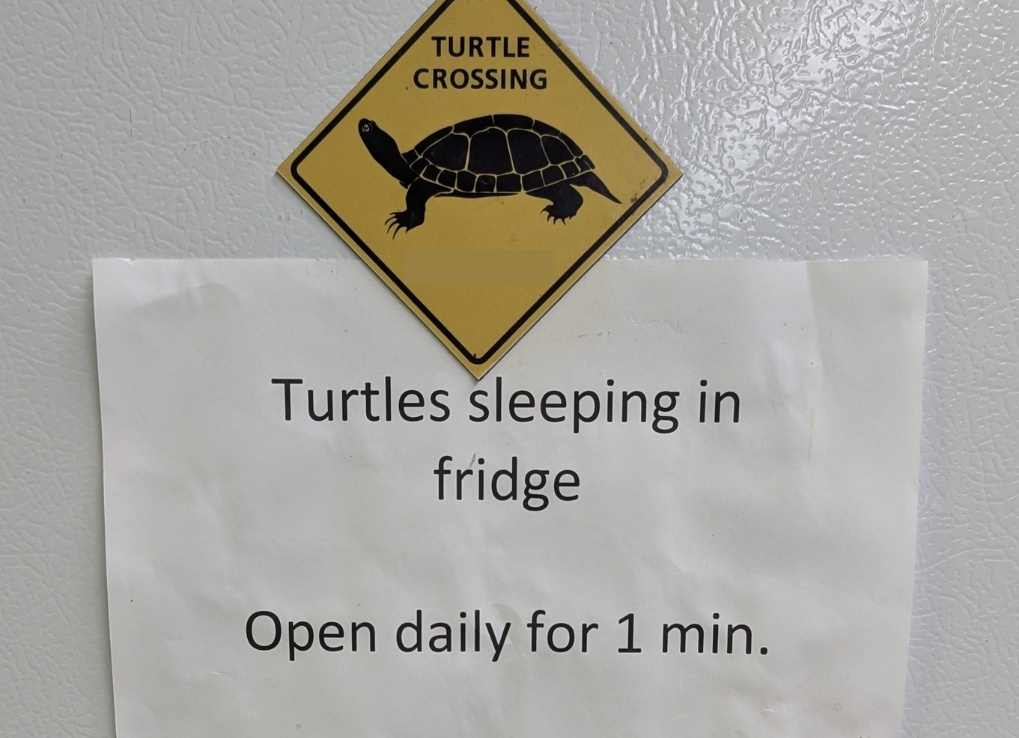
What is the Western Painted Turtle Recovery Program? In the wetlands of B.C.’s Fraser Valley, western painted turtles face many challenges, especially as eggs and tiny hatchlings. With no shortage of hungry predators and no care from their parents once they’ve hatched, only a few young turtles survive to become adults. When you add human activity to the mix, the rate of survival can be so low that a population becomes unsustainable. Since 2012, we’ve been working to improve those odds. In addition to protecting nests, we collect eggs from vulnerable turtle nests, artificially incubate them and head-start new hatchlings at our conservation lab located at the Greater Vancouver Zoo, before releasing them back into the wild.
With chilly temperatures hitting British Columbia this week and parts of Ontario already seeing snow, you might be wondering where our western painted turtles have gone for the winter! The answer is: they’re slowing things down.
In northern climates when the weather starts to get cold, western painted turtles enter a dormant state called brumation – basically the reptile equivalent of hibernation. Turtles are ectotherms, meaning they don’t produce their own body heat, so their body temperature matches the environment they are in. Brumation is a physiological response to colder weather and shorter days that allows the turtles to lower their energy needs so they can survive until the warm weather returns. While dormant, turtles lower their metabolism – requiring much less oxygen than normal and are able to survive on the limited oxygen they can absorb through their skin and the membranes in their throats and cloacas (turtle butt).
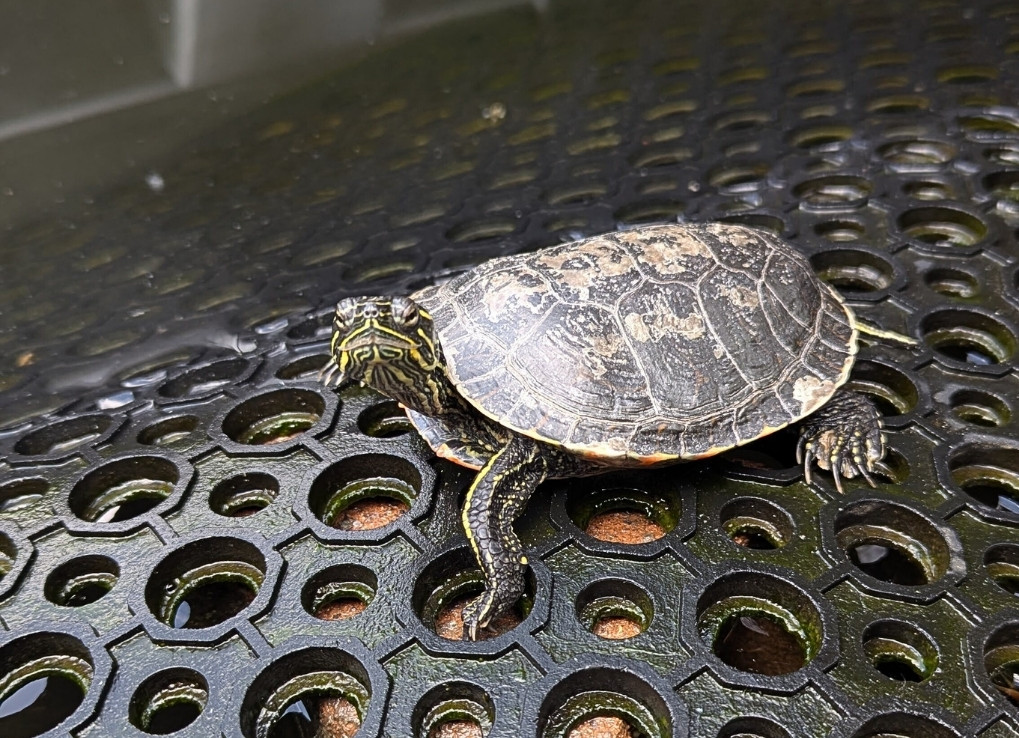
A western painted turtle in WPC’s Conservation Corner at the Greater Vancouver Zoo. Photo: J. Kissel.
In the wild, western painted turtles get cozy in the mud at the bottom of ponds and lakes that are deep enough to avoid freezing. Here in our turtle lab at the Greater Vancouver Zoo, they have a slightly different set up. While our western painted turtle program focuses on head-starting and releasing young turtles each year, we currently have a dozen adult painted turtles in our care – including Tutu! These adult turtles were brought to us either as confiscated pets or injured turtles that need somewhere to recuperate until they’re ready to be release again. To allow these turtles to experience the natural cycle of brumation while in our care, we encourage them to prepare for brumation by lowering their food intake and keeping them outside until the weather becomes consistently cool overnight. Then, we offer them a small bin filled with coco coir (made from fibres from coconut husk) to bury themselves in, and then place them in the fridge (we use this material because it has antifungal properties and is not harmful if ingested)!
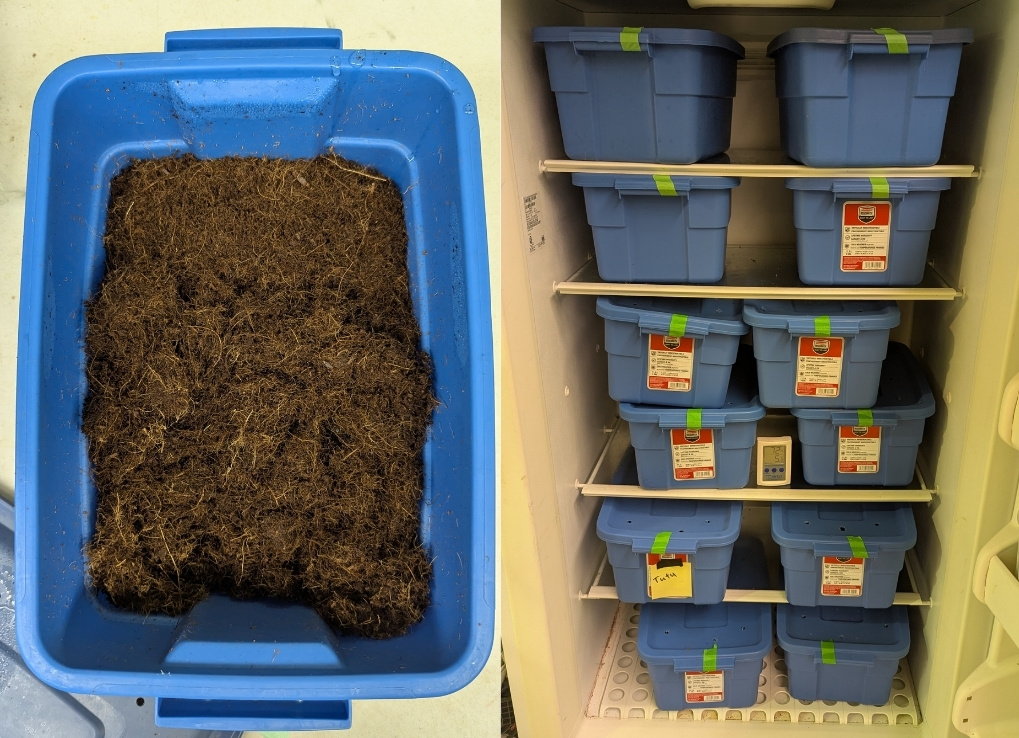
(Left) The turtles are placed in individual bins filled with coco coir to burrow into. There is a turtle in this bin – can you see its nose peeking out? (Right) There’s no vacancy at this winter getaway! Our fridge is at capacity, with 12 turtles each in their own bin for brumation. Photo: J. Kissel.
Yes, the fridge!! Keeping the turtles in the fridge mimics the environment they would experience during winter in the wild. They have their coco coir to burrow into, the fridge is dark and quiet, and we keep the temperature low (but not freezing) to maintain that dormant state. They do of course still need oxygen, so once a day we open the fridge door for a minute or two to let fresh oxygen in.
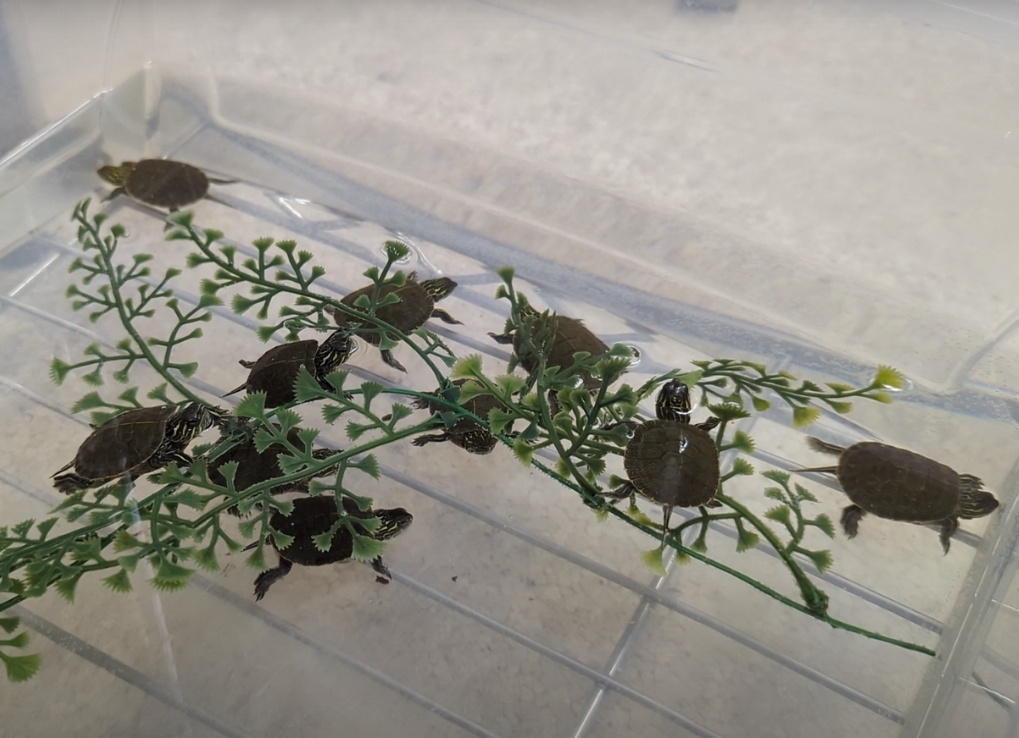
A few of the hatchlings from 2025 that will be reared in our turtle lab located at the Greater Vancouver Zoo. Photo: J. Kissel.
While the adult turtles rest comfortably in their winter accommodations, the rest of the turtle lab is full of head-started turtles from the 2024-2025 season. This year, we kept about 250 hatchlings to be head-started over the winter, in addition to turtles that were too small to be released this summer. In the wild even young turtles will brumate, but in our lab we keep them awake to give them the opportunity to eat and grow bigger so they will have an advantage against predators when they are eventually released.

Jenna Kissel
Conservation Programs Assistant – B.C. Projects
Jenna joined WPC as a conservation programs assistant, supporting the western painted turtle, Oregon spotted frog, and Taylor’s checkerspot butterfly programs. She graduated from the University of Guelph with a BSc in Wildlife Biology and Conservation and has a background in avian husbandry and propagation. She spent several years in spotted owl conservation and is looking forward to continuing her work in endangered species recovery as part of the BC Projects team.
Recent articles on the project
We need your help