Frog detective on the case
Posted onApril 22, 2026byWildlife Preservation CanadaPhoto: A. Gielens.
What is the Oregon Spotted Frog Recovery Program? Since 2010, WPC has been breeding the endangered Oregon spotted frog at the Greater Vancouver Zoo, and reintroducing thousands of tadpoles and froglets back into wetlands in B.C.’s Fraser Valley. It takes years of careful observation, collaboration, ingenuity and sometimes a little luck to crack the code to breeding specific species. For several years, our progress was very limited, but our team persevered. Today, WPC has released over 64,000 tadpoles, froglets and eggs back into wild. We are turning the tide for this species.
Wildlife Preservation Canada’s Oregon spotted frog captive breeding program has seen thousands of tadpoles and juveniles released into the wild since the program began in 2010: 64,523 to be exact. Each breeding season we begin with a moderate conservation breeding population, this year we have 30 females and 68 males. As always after spending the winter apart, the females and males are reunited in the female’s Love Tubs in the spring, aligning with the beginning of breeding in the wild.
While this program has seen lots of success since its establishment, the Oregon Spotted Frog Recovery Team is always interested in improving on our success… That’s why WPC is working with me, a graduate student, Joelle Krol, to investigate new methods for the program!
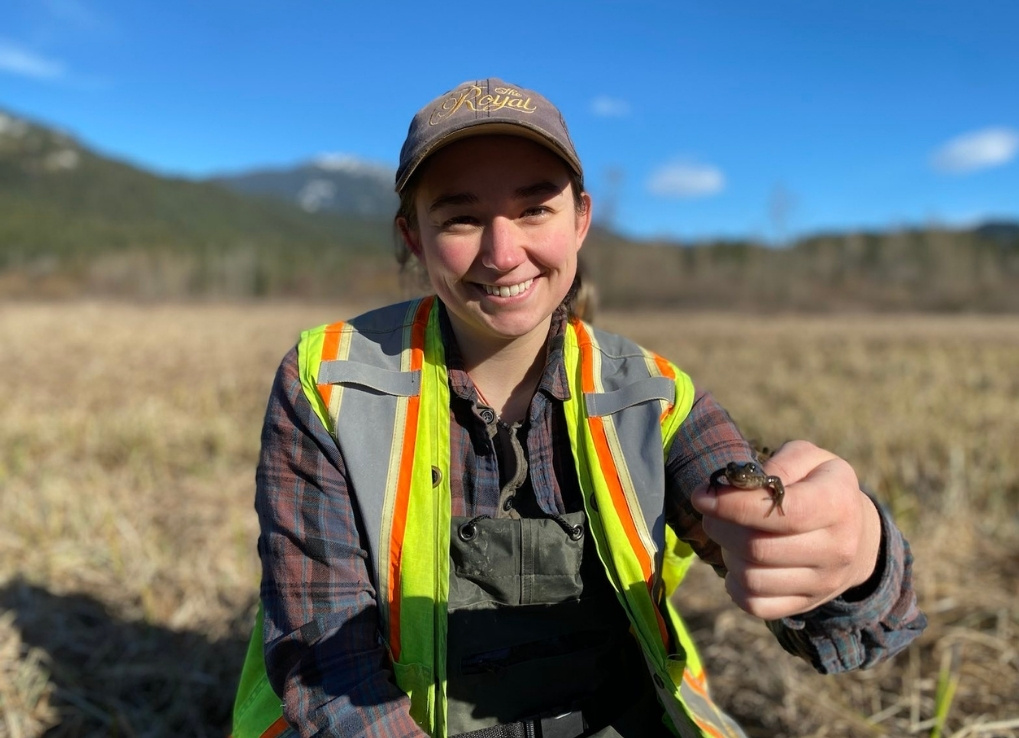
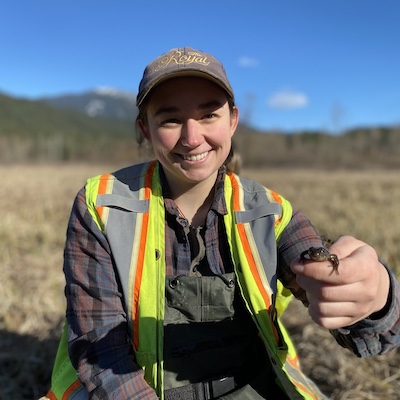
Joelle Krol holds an endangered Oregon spotted frog in her hands at one of the release sites.
We already know that there are tons of environmental conditions or factors that impact frog development in the wild like predation, cold temperatures, extreme wind, flooding and even drought (to name a few), but it’s hard to isolate for each of those conditions, plus we aren’t interested in subjecting a endangered frogs egg masses to any of these conditions. These frogs already have a lot to overcome in the wild with a survival rate of about 1% (from newly laid embryo to breeding adult in the wild). The breeding program helps to boost this survival rate, but we’re always aiming for higher survival!
A challenge with any conservation breeding program is the transition from captivity to the wild. WPC has thousands of these tadpoles and froglets that have only known human care, having been born and raised at the Conservation Corner located at the Greater Vancouver Zoo. While the team works to ensure this transition is as smooth as possible (acclimating the tadpoles and juveniles to their new home in the wild), the transition can still be stressful. This leads us to a question we’ve been considering: will the survival of Oregon spotted frogs be higher if they’re transitioned to the wild as eggs or as tadpoles?
That’s where my research comes in. I’m focused on determining how transitioning endangered Oregon spotted frogs to the wild at different life stages impacts their survival. This breeding season, I will be transitioning Oregon spotted frog egg masses to the wild site where they’re normally released as tadpoles and juveniles. I will then compare these egg masses to those developing back at the Greater Vancouver Zoo and observe how the difference in environment impacts their development.
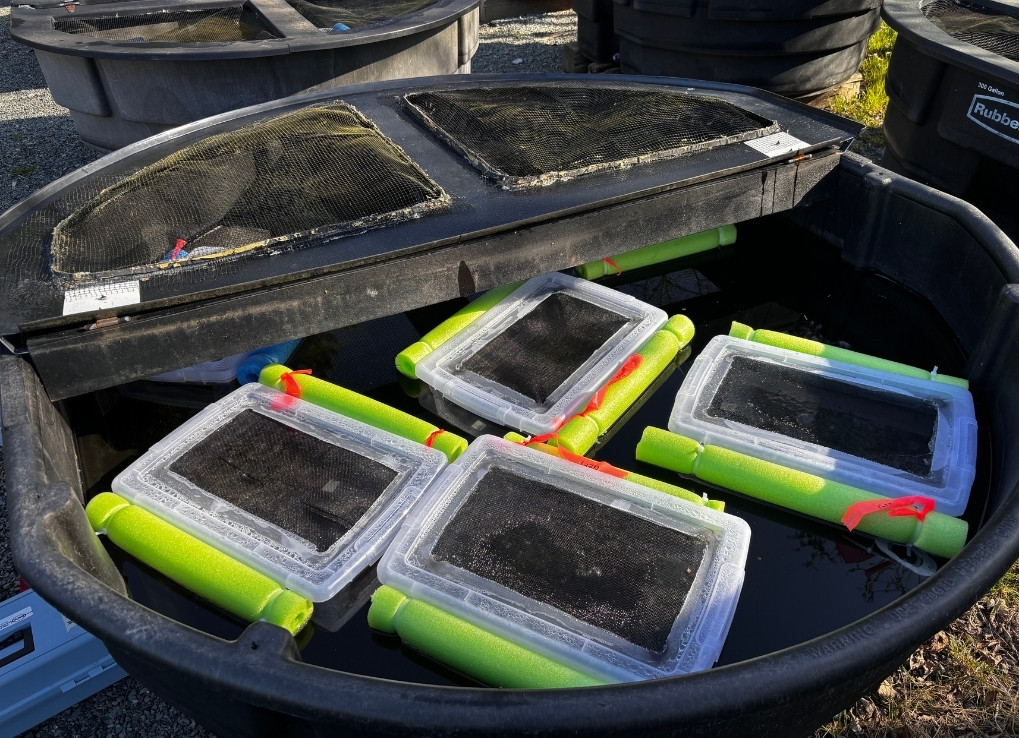
The egg masses located at the Greater Vancouver Zoo that will be used to compare against the wild placed egg masses. Photo by J. Krol.
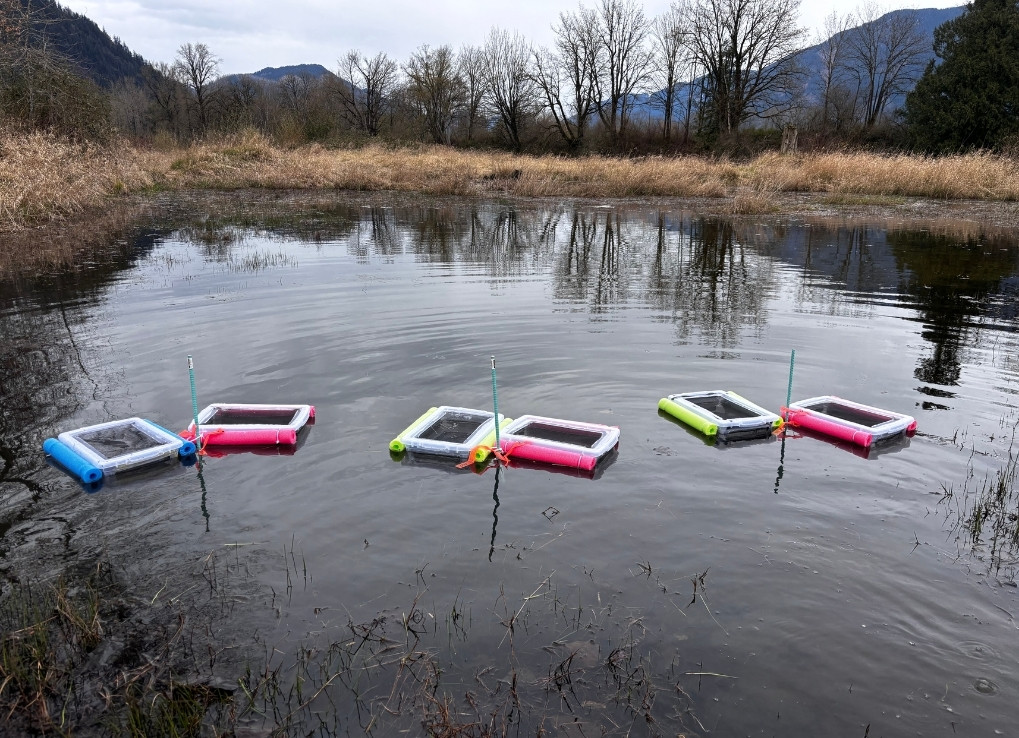
The egg masses placed at the release site that will be used to compare against the zoo egg masses. Photo by J. Krol.
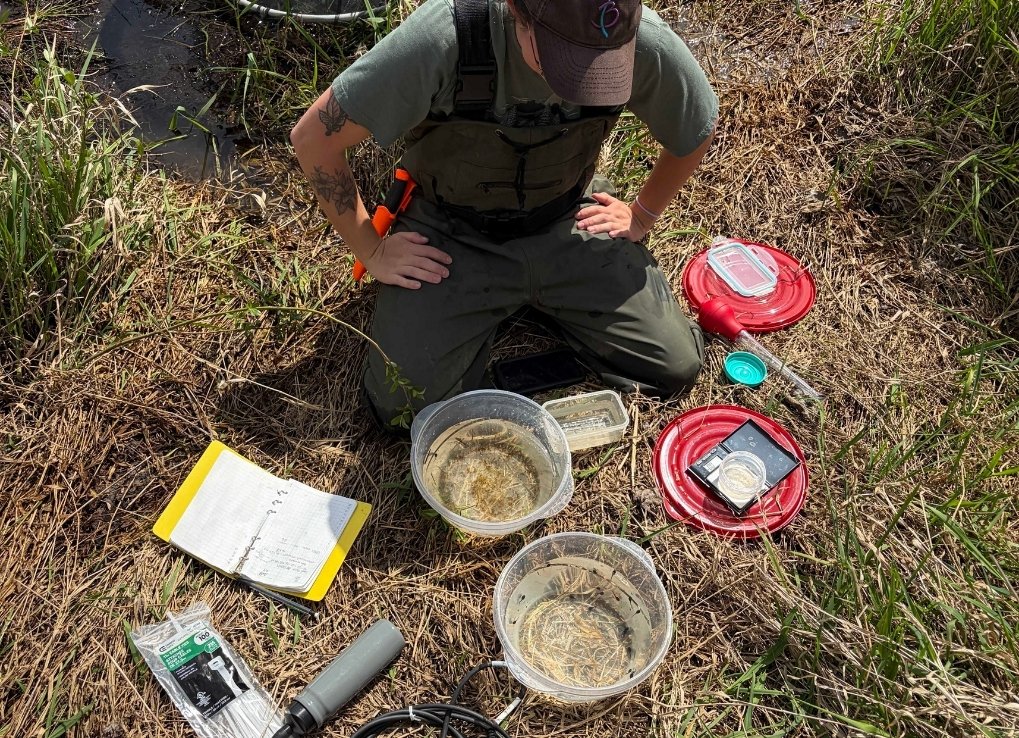
Knowing how many variables could impact this frog’s development, I will be recording any weather events experienced by the eggs in the wild, I’ve eliminated the threat of predation by predator-proofing the floating egg enclosures (just like the zoo eggs), and I will also be taking measurements of water quality at the release site and breeding tanks. This leads me to another question we’ve been considering: is the water quality at the release site impacting development?
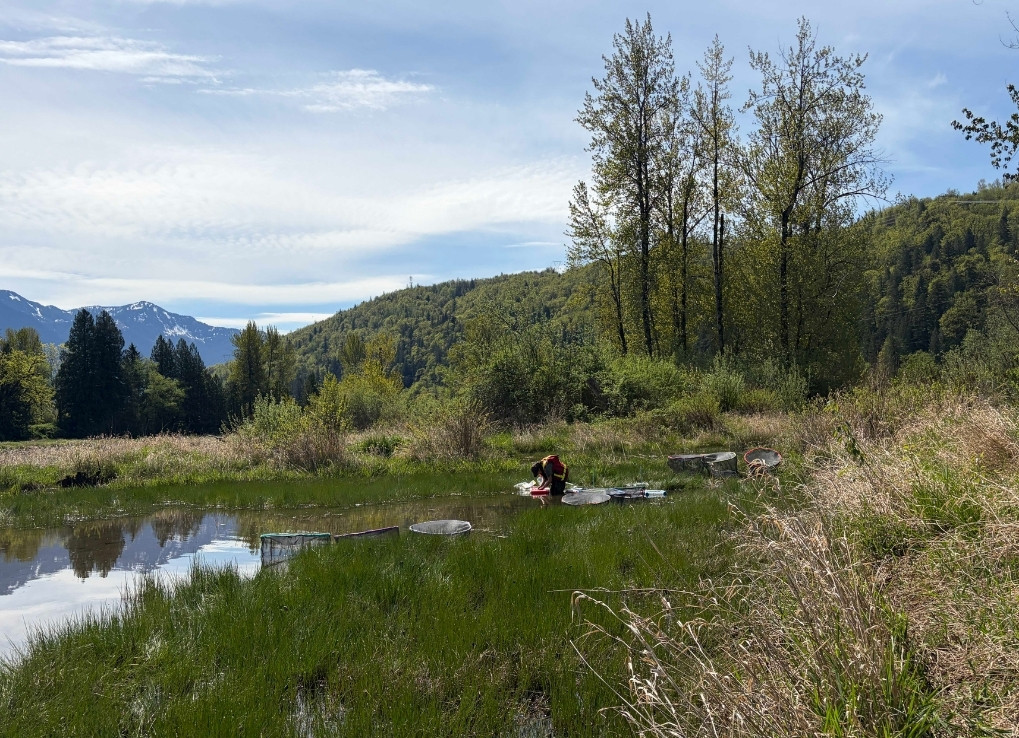
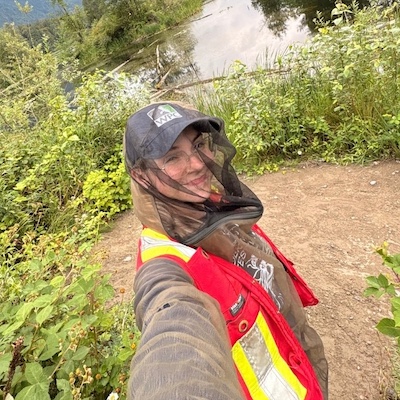
Joelle at the release site. Photo by A. Gielens.
Since the release site is surrounded by agricultural lands, we’re wondering if pesticide and herbicide runoff is negatively impacting the species as well. I’ll test sediment samples for a few target pesticides, test total and dissolved metals in the water, track pH, conductivity, dissolved oxygen and temperature of the water to determine if it has any effect.
When the tadpoles hatch, I’ll transition more of them to the wild and observe the differences in survival and development between the tadpoles that were (1) transitioned as embryos and (2) those transitioned to the wild after hatching and (3) to those still at the Zoo.
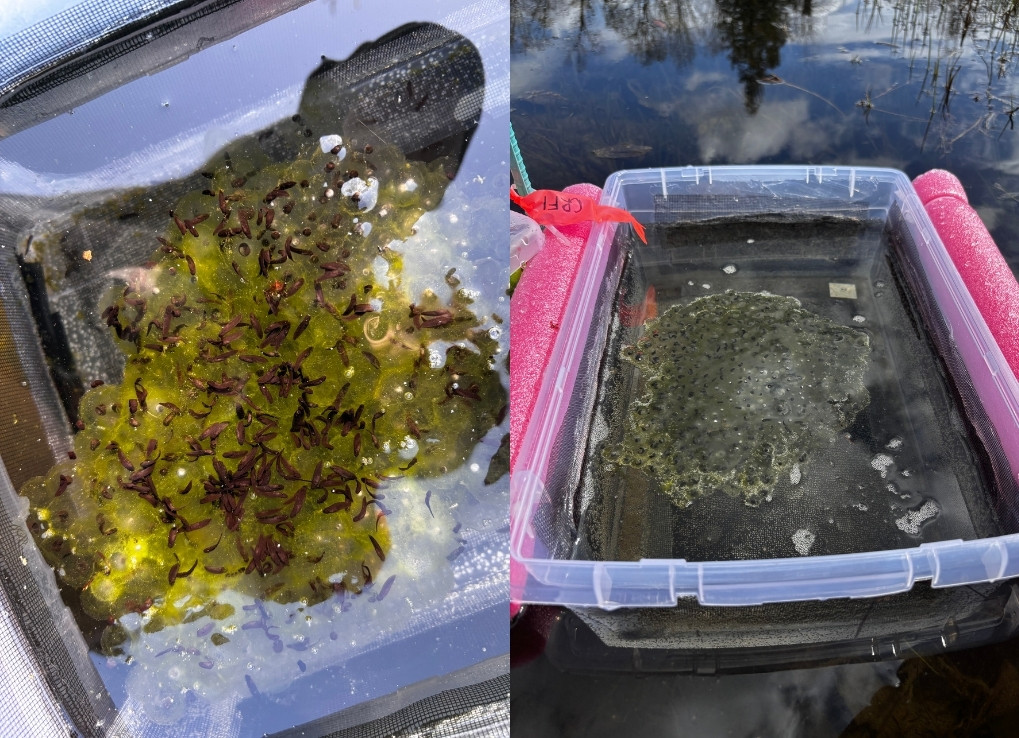
(Left) Egg masses that have developed a bit further along and have produced some elongated eggs and even some tadpoles. (Right) A less developed egg mass floating in one of the plastic enclosures in the wild. Photos by J. Krol.
By observing how the frogs develop from embryos to tadpoles to froglets, we’ll have more information about how this endangered species can handle the release to the wild at different life stages and the impact that water quality has on their survival. The results of this research will be used to inform future decisions for the recovery of Oregon spotted frogs (aka Canada’s most endangered amphibian).
This project was developed and is being undertaken as a collaboration with Andrea Gielens (Wildlife Preservation Canada), Briar Hunter (Ministry of Water, Lands, and Resource Stewardship) and Dr. Vicki Marlatt (Simon Fraser University).
A special thank you to Jack S. Darville for his continued support through the Darville Frog Conservation Endowment Fund.
We need your help