New spider species discovered
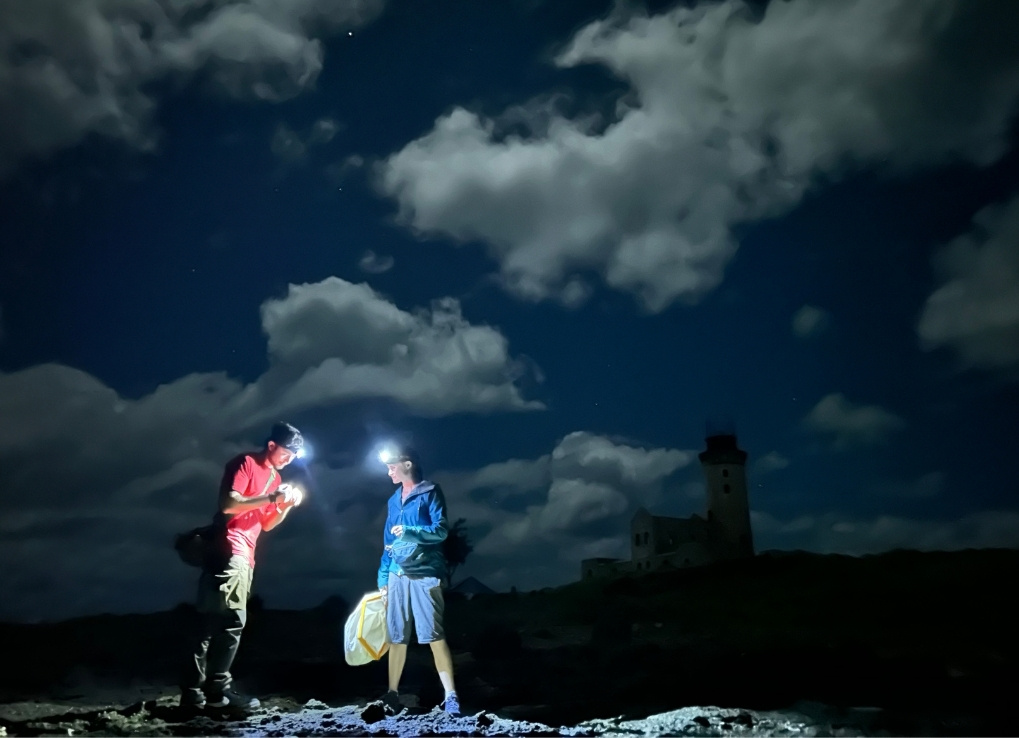
Posted onMay 11, 2026bySarah Falconer| Photo: M. Tercel and A. Ferguson on a night survey, photo by S. Falconer.
What is the Canada’s New Noah Program? Since 1988, the Canada’s New Noah program has provided conservation biologists in Canada the opportunity of a lifetime. Each year, WPC selects a dedicated biologist from applicants across Canada to undertake a 3-month course at the Durrell Conservation Academy in the U.K. followed by a 6-month internship on the island of Mauritius in the Indian Ocean. This is an opportunity unlike any other for young Canadians to learn firsthand how the world’s most successful conservation recovery programs are managed and to bring this knowledge and experience back to improve Canada’s conservation capacity.
For the first time ever, WPC is offering this placement to two biologists. Our 2026 New Noahs are Jenna Kissel – WPC’s 35th Canada’s New Noah, and Daryn Farrant – WPC’s 36th Canada’s New Noah. Both report on their experiences and how they will apply them upon return to Canada. Thank you to the Alan & Patricia Koval Foundation for their many years supporting the Canada’s New Noah Program and for going above and beyond supporting two Koval Foundation New Noah Internships in 2026.
What has 8 legs, lives by the sea, and makes its own home? A spider of course! For those who were following my New Noah journey nearly three long years ago (time flies!) you may remember that during my time in Mauritius, I participated in some entomological surveys on a few of the offshore islands. Spending my days learning about Aldabra tortoises, invasive species, sampling methods and reintroducing native plants… I also had the opportunity to learn from staff in the Islands Restoration Programme, a partnership between the Durrell Wildlife Conservation Trust, Mauritian Wildlife Foundation and National Parks and Conservation Service and join in on some surveys! Using a variety of different methods I helped to survey some of the island’s smallest creatures, from ants to beetles to moths, to better understand the make-up of different species.
In addition to sampling the broader community, we were also tasked with a special mission – a search for a very unusual spider. Prior to my arrival, some of the scientists in Mauritius had noticed an interesting spider on one of the small islands off the mainland. Discovered only by glimpsing its long legs poised outside a small trapdoor, this nocturnal spider seemingly made its home in coral rocks very near to the coast. In some cases, it appeared as though these trapdoors might be submerged by sea water at high tide. They were eager to know if this unusual creature was on any of the other islands as well.
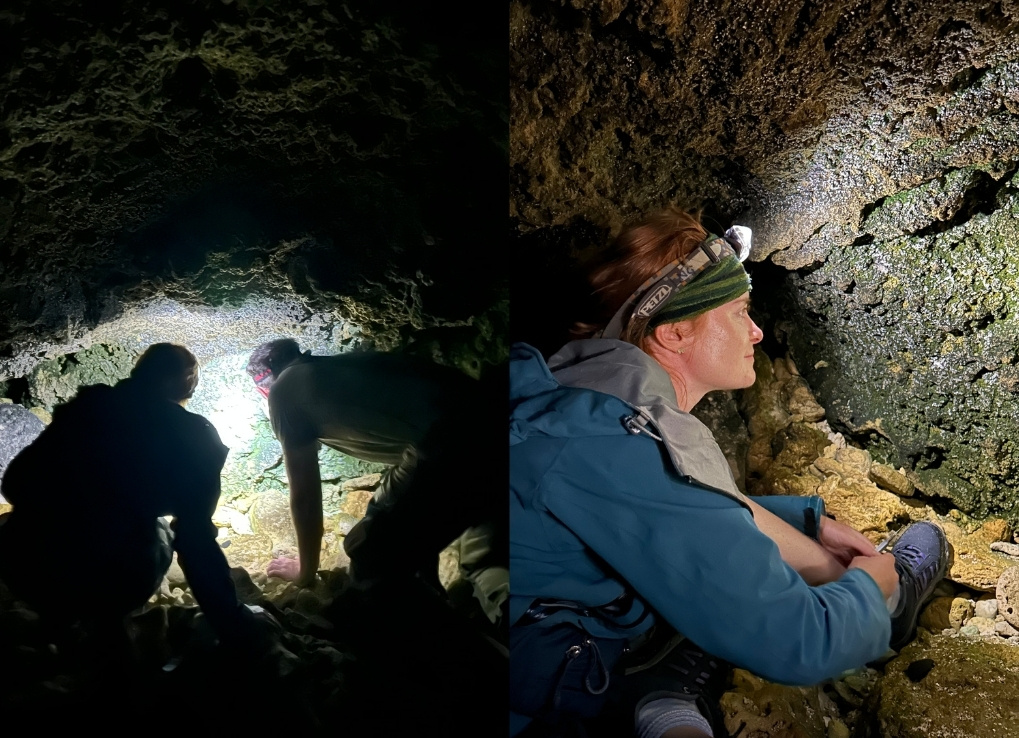
(Left) A. Ferguson and M. Tercel search the rock wall. (Right) A. Ferguson is making sure to get into every nook and cranny to try and find the spider. Photos by S. Falconer.
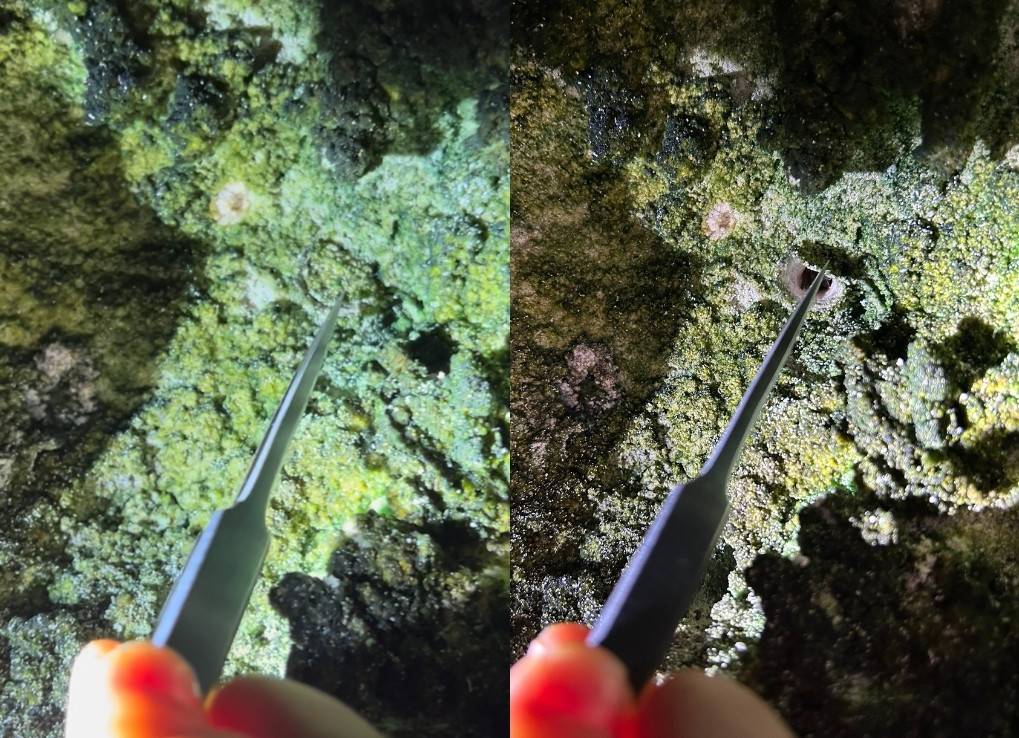
Perfectly camouflaged, the spiders tiny trapdoor made of sand, algae and very small rock fragments. Photos by S. Falconer.
After unsuccessful searches on one island, the sharp eyes of the project entomologist spotted our quarry on Ile aux Fouquets. We found nearly imperceptible trapdoors scattered across a few of the coral rocks near the shore. Only about the size of a quarter, these nearly invisible trapdoors blend in seamlessly with the rock, covered by sand and algae. Extensive data were collected on the location of these burrows and the spiders themselves.
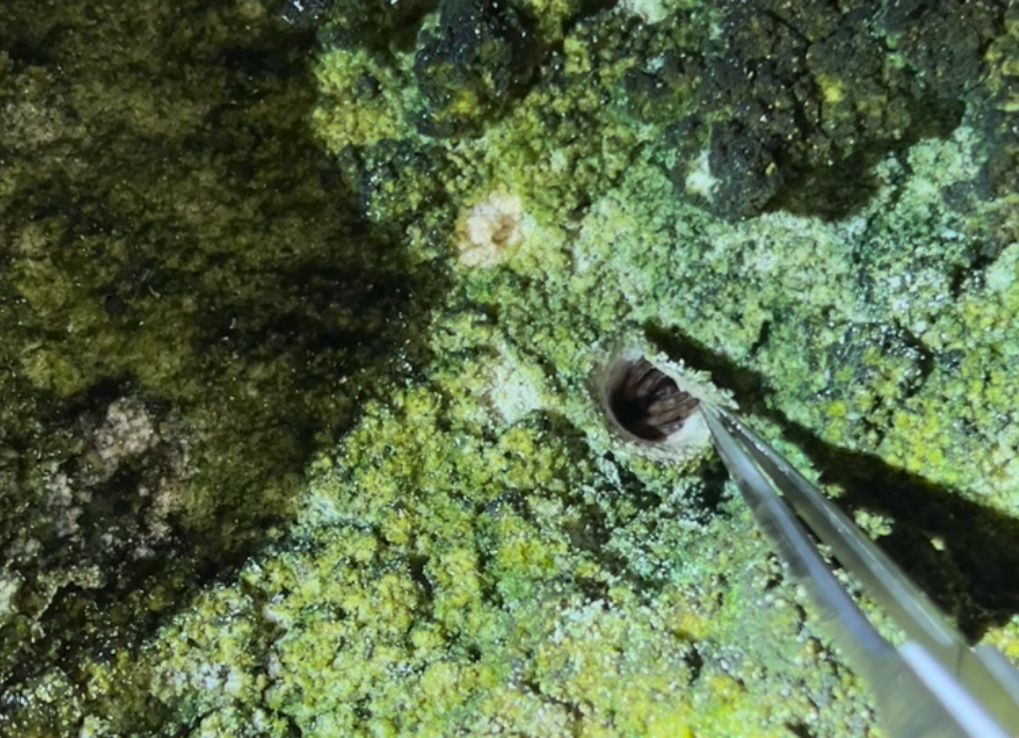
The legs of Idioctis marevallum just visible behind the open trapdoor. Photo by S. Falconer.
Because of the unusual nature of these spiders, specimens were sent for expert review, including by taxonomists at the Natural History Museum in London. After a lot of analysis and discussion an exciting conclusion was reached – this was a new species! Actually a tarantula, this species was determined to be a flagship endemic (found nowhere else) of intertidal trapdoor spiders. The name Idioctis marevallum was decided for this new tarantula, from the latin meaning “sea wall” – a nod to its intertidal tendencies. These findings were recently published in the journal Arachnology, which you can read here.
I feel very lucky to have been a small part in this fantastic new discovery as part of my New Noah journey. I hope studies like this bring new understanding of the incredible flora and fauna of the nation and in doing so, we are better equipped to protect it for future generations.
Sarah was WPC’s 32nd New Noah. She built upon a wealth of conservation knowledge that she gained working in Canadian conservation in British Columbia and Manitoba through this hands-on training program with some of the most endangered species in the world. After her time with WPC, Sarah began working with Wilder Institute, and continues to, to this day!
We need your help