A chattering of choughs
Posted onApril 24, 2026byJenna Kissel| Photo: D. Farrant
What is the Canada’s New Noah Program? Since 1988, the Canada’s New Noah program has provided conservation biologists in Canada the opportunity of a lifetime. Each year, WPC selects a dedicated biologist from applicants across Canada to undertake a 3-month course at the Durrell Conservation Academy in the U.K. followed by a 6-month internship on the island of Mauritius in the Indian Ocean. This is an opportunity unlike any other for young Canadians to learn firsthand how the world’s most successful conservation recovery programs are managed and to bring this knowledge and experience back to improve Canada’s conservation capacity.
For the first time ever, WPC is offering this placement to two biologists. Our 2026 New Noahs are Jenna Kissel – WPC’s 35th Canada’s New Noah, and Daryn Farrant – WPC’s 36th Canada’s New Noah. Both report on their experiences and how they will apply them upon return to Canada. Thank you to the Alan & Patricia Koval Foundation for their many years supporting the Canada’s New Noah Program and for going above and beyond supporting two Koval Foundation New Noah Internships in 2026.
I can’t believe I’ve been in Jersey for six weeks already, reaching the halfway point of Durrell’s Endangered Species Management (DESMAN) course. It has been a whirlwind few weeks full of activities, from meeting fellow students from around the world to hiking the Jersey coast to spending as much free time at the Jersey Zoo as possible. Of course, we’ve been busy with coursework as well, covering a broad range of topics like population monitoring, conservation education, and a mini-course on the Conservation Standards, all coming together to improve our skills as conservationists. Personally, my favourite subject so far has been the week we spent on conservation management, discussing captive breeding and reintroduction as conservation tools for species recovery. We were treated to guest lectures by the renowned Dr. Carl Jones and a field trip to see Durrell’s red-billed chough reintroduction project.
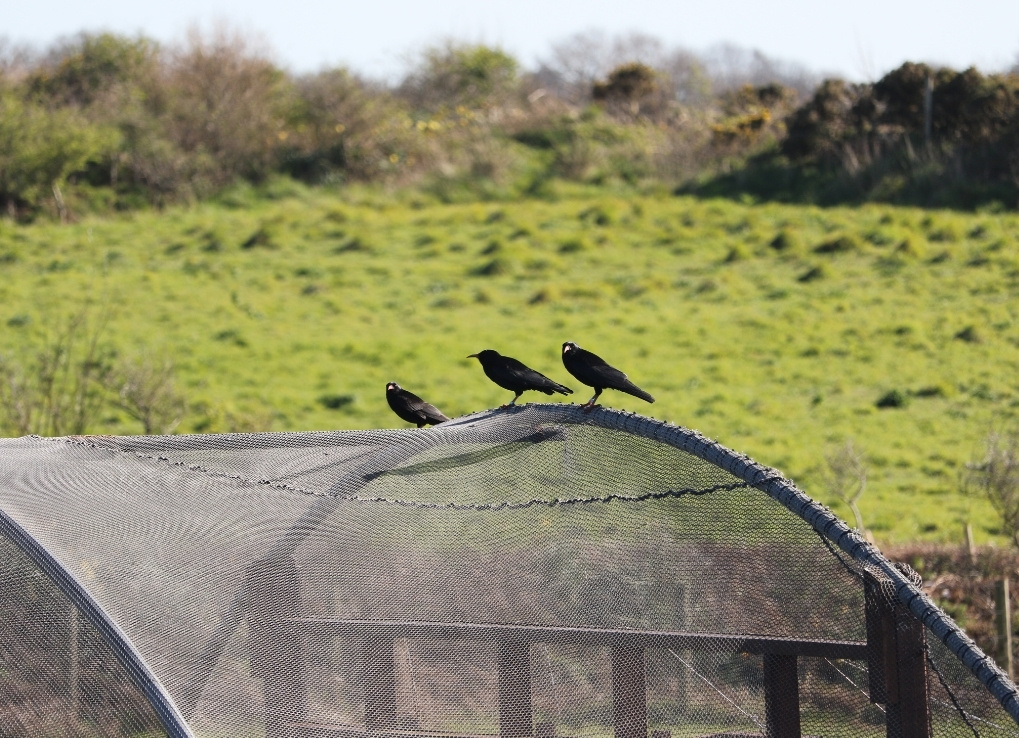
Three red-billed choughs on top of the supplemental feed aviary. Photo by D. Farrant.
Red-billed choughs (pronounced “chuff”) are a member of the corvid family, listed as least concern globally but were extinct on Jersey for over 100 years. Thanks to the work of the Durrell Wildlife Conservation Trust and their partners, choughs have been reintroduced to the cliffs of Jersey, with over 80 birds flying free along the north coast. The reason for the chough’s local extinction on Jersey is a common threat many species face: habitat loss. For the choughs, this was the loss of grazed grasslands that were maintained by sheep farming. After changing agricultural practices in the late 1800s, the fields where sheep grazed were abandoned. Without the sheep to keep plant growth down, the fields became overrun with bracken, hindering the chough’s ability to forage. This led to the chough’s extinction in Jersey by 1900. The chough reintroduction project combines three pillars of species recovery: captive breeding & release, wild management, and habitat restoration.
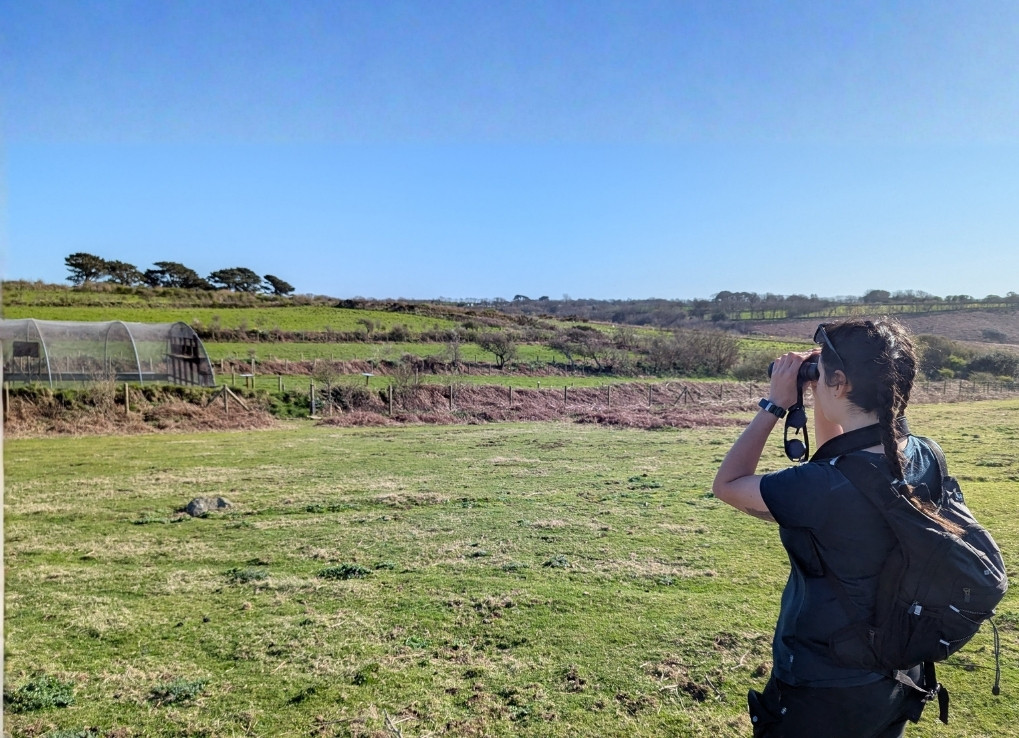
On a beautifully sunny day we spent the afternoon at the chough release site on the north coast, overlooking the ocean. We made our way along the narrow cliff path to where Durrell maintains a supplementary feeding station for the wild choughs, and were just in time to observe their daily feed (almost like it was planned!). Zookeepers from the Jersey Zoo offer the choughs food in dishes that allow them to mimic their foraging behaviour in a large, open-ended aviary. We not only saw the choughs come down to feed, but also saw flocks of them cruising on the wind blowing up off the ocean. To my delight (but not the choughs’) we also saw a peregrine falcon soaring over the cliffs!
An unexpected species we saw at the release site was a herd of Manx Loaghtan sheep. The sheep were introduced as part of the habitat management project at the site, to graze and restore the foraging landscape the choughs rely on.
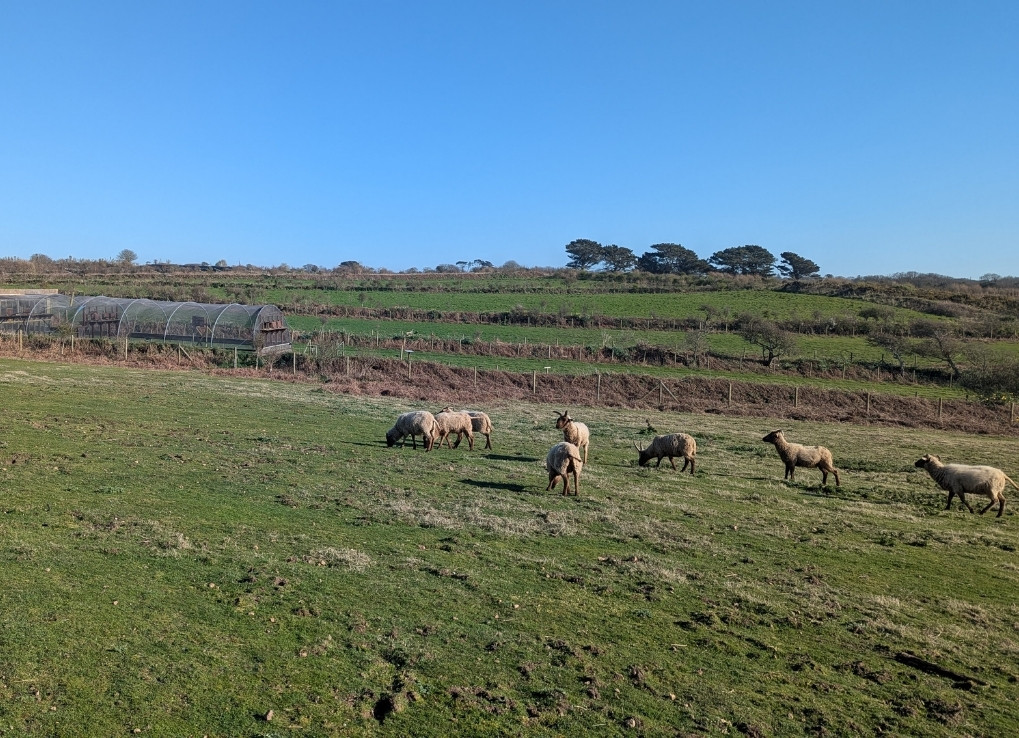
A herd of Manx Loaghtan sheep at the chough reintroduction site, with the supplemental feed aviary in the background. Photo by J. Kissel.
After visiting the chough’s release site, I was reflecting on Dr. Jones’s lectures. He stressed the importance of wild management, such as supplementary feeding and monitoring, and how it’s a crucial step between reintroducing individuals and a self-sustaining population. The red-billed chough project is an incredible example of captive and wild management working together to restore an imperiled species. Captive breeding and release brought the choughs back to Jersey, and wild management allows them to thrive while habitat is still being restored to its original state.
Shocking no one, the choughs are one of the highlights from my time in Jersey. Read more about their conservation here: Red-billed choughs.
P.S. If you happen to be located on Jersey Island, U.K., check out the Jersey Evening Post! This blog was featured on April 24, 2026!
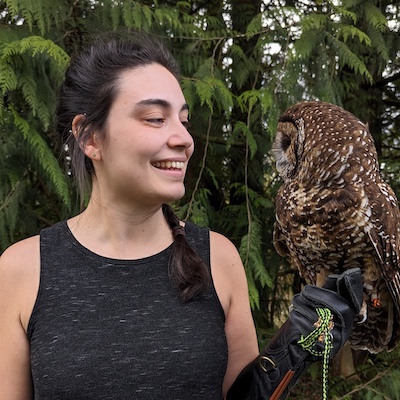
Jenna is a zookeeper and wildlife conservationist who is passionate about endangered species recovery. She graduated with a BSc in Wildlife Biology & Conservation from the University of Guelph before moving to British Columbia to work with northern spotted owls. Her background is in raptor conservation, specializing in husbandry and conservation breeding. She has been fortunate to work with many different species and conservation programs over the last 8+ years and can’t wait to continue this work with the skills she’ll gain from the New Noah Program.
We need your help