Nine photos and nine lessons in nine months: a Canada’s New Noah retrospective
Posted onJanuary 21, 2026byMariel Terebiznik|Canada's New Noahs, News and Events

Since 1988, the Canada’s New Noah program has provided young conservation biologists in Canada the opportunity of a lifetime. Each year, WPC selects a dedicated biologist from applicants across Canada to undertake a 3-month course at the Durrell Conservation Academy in the U.K. followed by a 6-month internship on the islands of Mauritius and Madagascar in the Indian Ocean. This is an opportunity unlike any other for young Canadians to learn firsthand how the world’s most successful conservation recovery programs are managed and to bring this knowledge and experience back to improve Canada’s conservation capacity. Mariel Terebiznik is WPC’s 34th Canada’s New Noah and reports on her experiences and how she will apply them on return to Canada. The Canada’s New Noah Program is generously supported by the Alan & Patricia Koval Foundation.
In 2025, I got to do something remarkable: I embarked on a 9-month journey as Canada’s New Noah. The purpose of Canada’s New Noah is to help train the next generation of Canadian conservationists, so that was what I set out to do. For 271 days I had one job and that was to learn. This journey took me through the halls of Durrell Academy in Jersey, where I spent 3 months learning from world experts in conservation as part of the DESMAN (Durrell Endangered Species Management) course, and into the forests of Mauritius where I spent 6 months gaining practical field experience. Those 9 months were full of great adventures where I met some of the world’s rarest species, made lifelong friends, gained new skills, and had a whole lot of fun. While it is hard to look back on such a long and impactful time away and succinctly summarize what it meant to me, I will do my best with these 9 photos and 9 lessons from 9 months as Canada’s New Noah.
February
The first step of my journey took me to Jersey and home to the Durrell Training Academy for the DESMAN course. One of the best parts of February was getting to meet all my classmates. We were a group of 15 students from all over the world with different experiences, backgrounds, languages, and expertise, but through whatever path led us to Jersey this year, we found ourselves in class together. For all of our differences, we were united with a shared passion for saving species from extinction and the desire to learn as much as possible from our time here. February saw us turn from strangers, to friends, to family as we shared our knowledge, culture, food, and time with each other. It was a wonderful lesson on how community can be found even in the unlikeliest group of people.
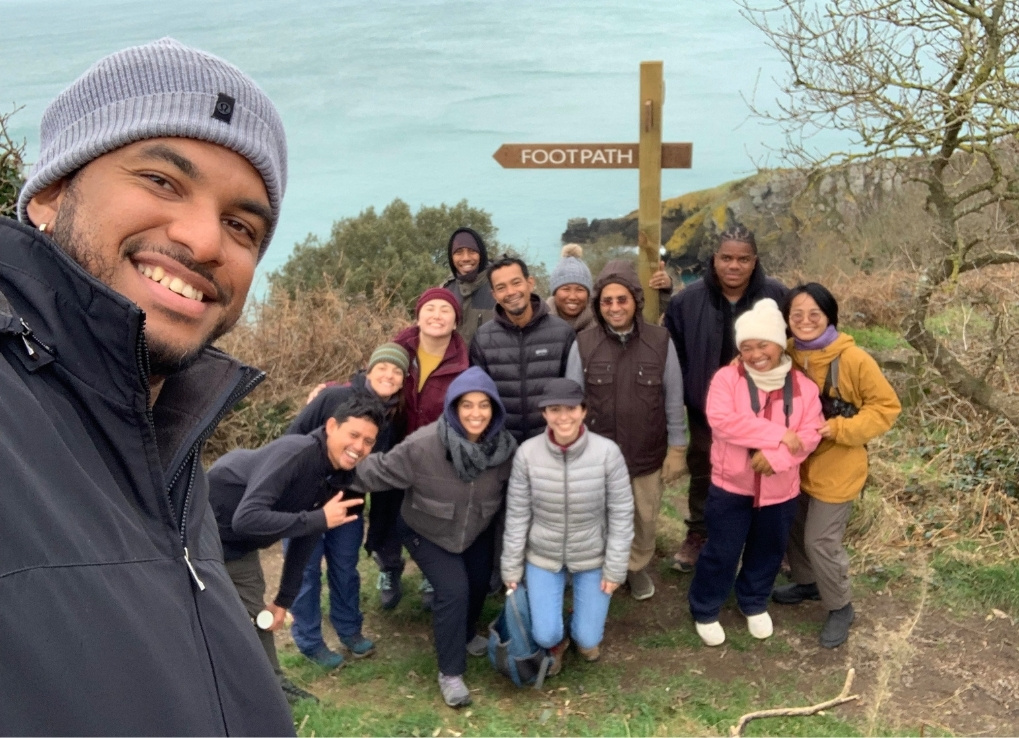
Classmates of the 2025 DESMAN Course. Photo: J. Wilson.
March
By March we were already in the thick of it, going to classes every day with the occasional field trip to see some of the conservation sites across Jersey including the Jersey Zoo. I had not realized how much I missed being a student and how much more enjoyable it is when you are studying something you love without the enormous pressure that you feel in academia. We complete several mini certificates within the larger diploma, including Communication and Facilitation, Leadership, Conservation Standards (a standardized system for planning conservation action), and GIS. Our schedule kept us busy, with every new topic being totally new to some in the class while being the specialty of others. In March we learned how a strong foundation for a conservationist requires many different types of knowledge and skills, and how there is always more to learn.
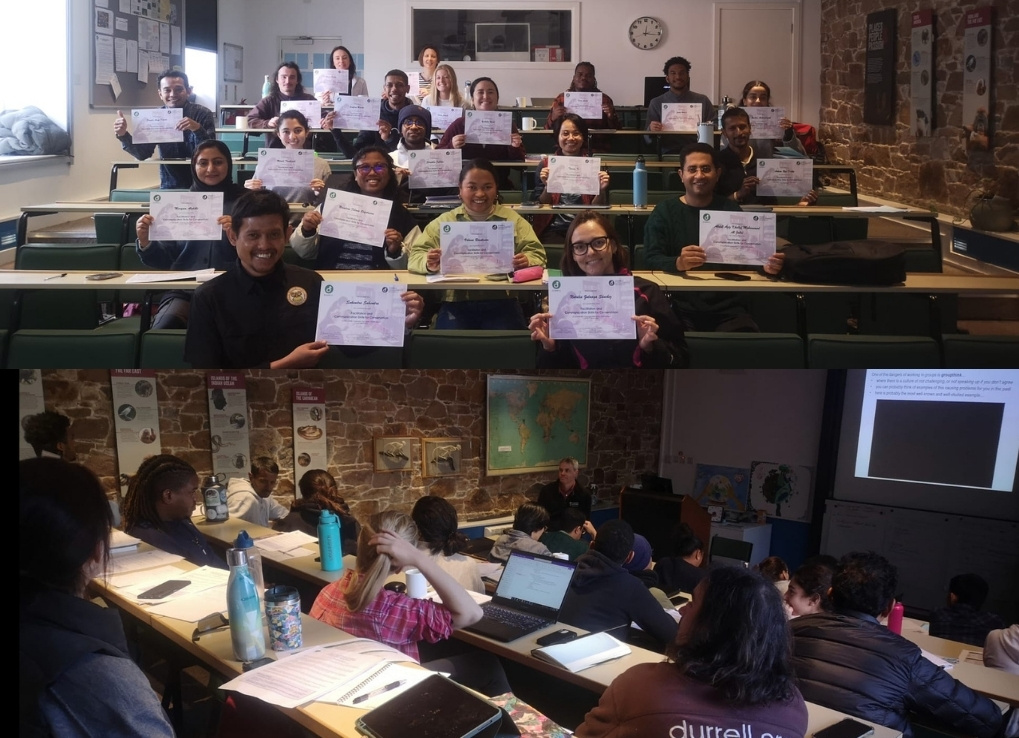
(Top) Everyone holds up their certificates in class. Photo: A. Heaver. (Bottom) Snapshot of a class in the DESMAN course. Photo: D. Craven.
April
In April, the DESMAN course was starting to come to an end. A big focus in these later weeks was on communication, community engagement, and public education. With classes wrapping up it was time to put all this knowledge to the test and practice our communication skills. We were given assignments to write persuasive essays, design scientific posters, and present on a conservation project proposal we developed. Many of us go into conservation for our love of plants and animals, but above all what the DESMAN course showed us is that conservation is really about people. As our classes kept teaching us: for effective conservation work, you need effective communication.
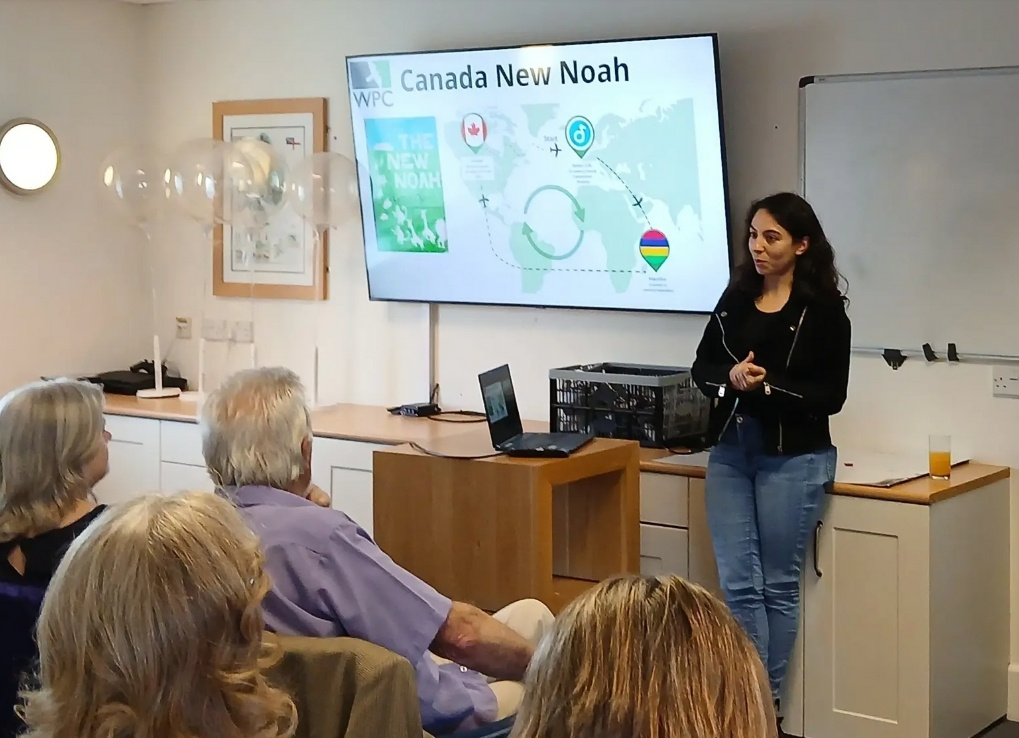
Mariel presents to the class. Photo: A. Heaver.
May
May brought a change of scenery as I landed in Mauritius ready for my 6 months there. A lot of my time was spent on Ile Aux Aigrettes, a conservation area where I got to take care of Aldabra Tortoises and search for rare geckos. I learned a lot about these unique reptiles like how Aldabra tortoises are obsessed with hibiscus flowers and that Gunther’s geckos are champions at hide and seek. It was fascinating to see how these tropical reptiles compared to their temperate counterparts I’m used to working with in Canada. Becoming acquainted with my new Mauritian reptile family was a reminder of a lesson I already learned a while ago: turtles are the best!
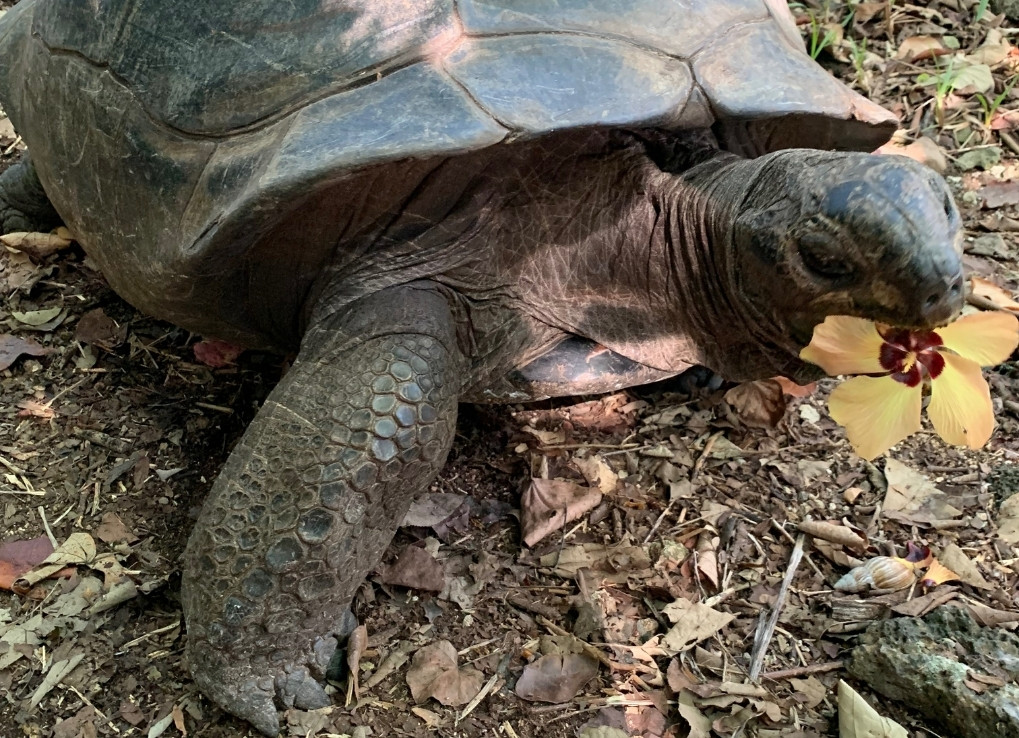
An Aldabra tortoise eats a hibiscus flower. Photo: M. Terebiznik.
June
While I did come to Mauritius with a pre-installed love of reptiles, they were not the only Mauritian species I got to know. In June, I also spent some time working with the Flora department. It involved a lot of hours in plant nurseries potting, repotting, and watering endemic plants. All these little seedlings will one day be planted back into the wild with support from the National Parks and Conservation Service to continue the ecological restoration of Mauritius’ native forests. While a lot of focus in conservation tends to go to charismatic animal species, working with the flora team taught me how essential protecting plants are for conservation of whole ecosystems.
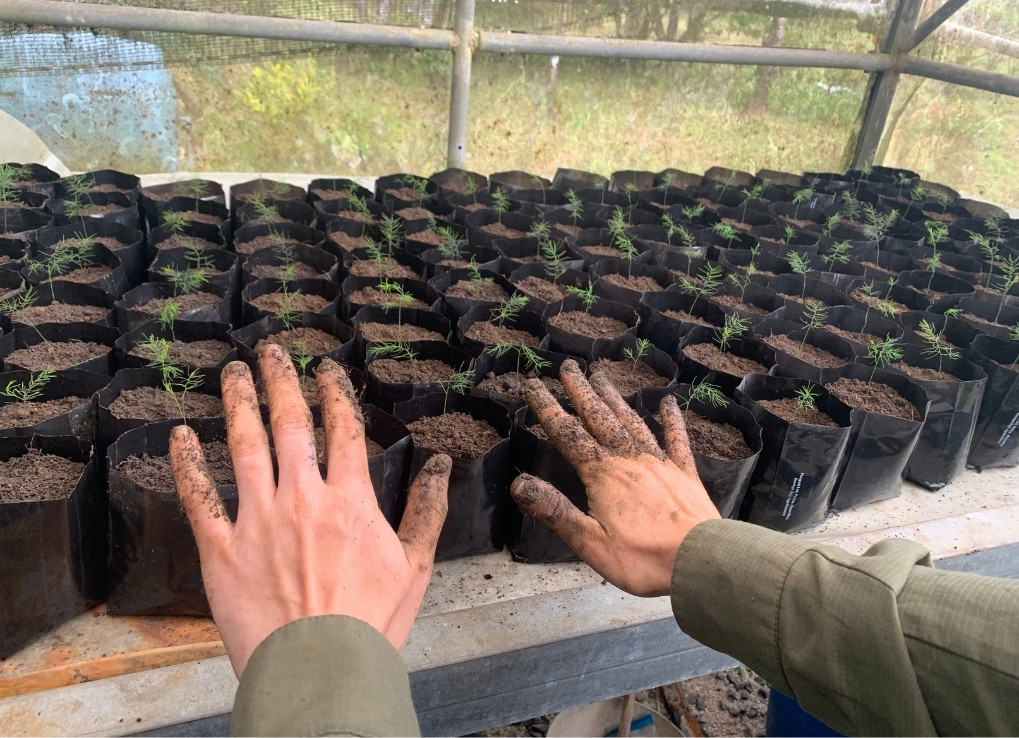
Mariel’s dirty hands after working with some seedlings. Photo: M. Terebiznik.
July
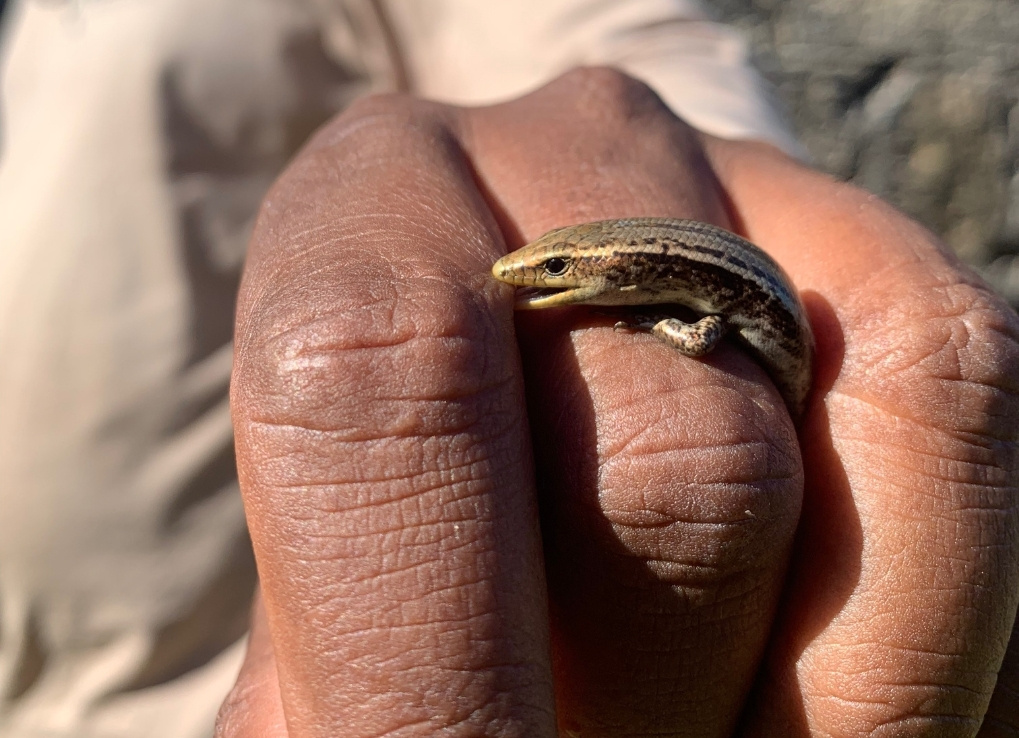
In July I got a wonderful opportunity to work on a series of small islets off the coast of Mauritius surveying for Bojer’s skinks. The homes of these small, endemic skinks were hit with an oil spill back in 2020 requiring urgent action to help save the species. As part of a program to monitor the wild population, I camped out on these small islets as part of capture mark recapture surveys. These skinks are also getting help from captive breeding back at Jersey Zoo to help revitalize the wild population after the oil spill. With the odds stacked against them, these lizards are persevering – proving that even the smallest of creatures can put up a good fight. As a small person myself, it is a lesson I will not forget.
Skink bites finger. Photo: M. Terebiznik.
August
Oftentimes, the species you want to help save are in places that are difficult to get to. September gave me a new skill to help deal with this problem. Along with colleagues that work with the Mauritius kestrel and echo parakeet, I took a Wilderness Working at Heights course and learned how to access the tops of trees and sides of cliffs safely using ropes and a harness. Previously the most dangerous part of my field work was just getting in a canoe. This course emphasized the importance of necessary safety procedures and equipment throughout your work so we can help species even in the most inaccessible places.
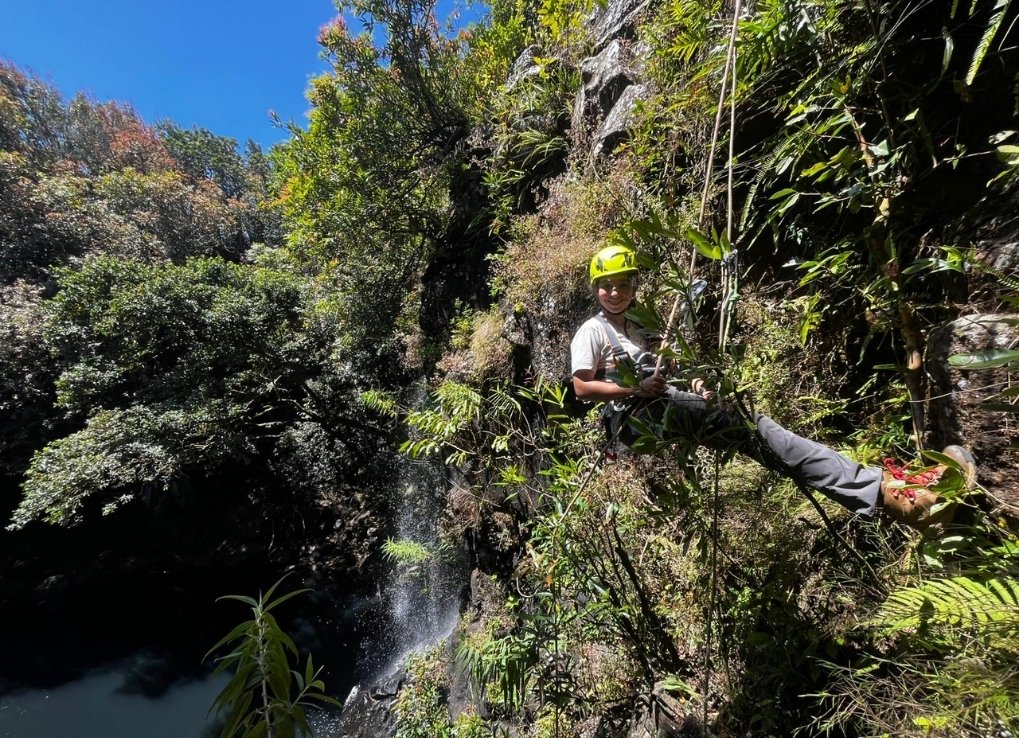
Mariel on a climbing course. Photo: N. Langmuir.
September
During my last month in Mauritius and as Canada’s New Noah, I got to go to the famous Round Island. It was a magical experience searching for reptiles by starlight, catching seabirds, and searching for cryptic invasive plant species. Many of the species on Round Island are found nowhere else in the world. They survive on Round Island thanks to decades of work to restore the once destroyed ecosystem. For them to continue to survive and one day thrive, decades more work is needed. Round Island is a symbol of conservation success but also serves as a lesson that this work takes time.
It is hard to say goodbye to the position of Canada’s New Noah. It was truly a gift to spend 9 months gallivanting across the world to learn about conservation amongst some of the world’s coolest species. Now back home, the cycle can begin again with the next set of New Noahs taking off for Jersey. I for one, cannot wait to hear about all the lessons they will learn along the way.
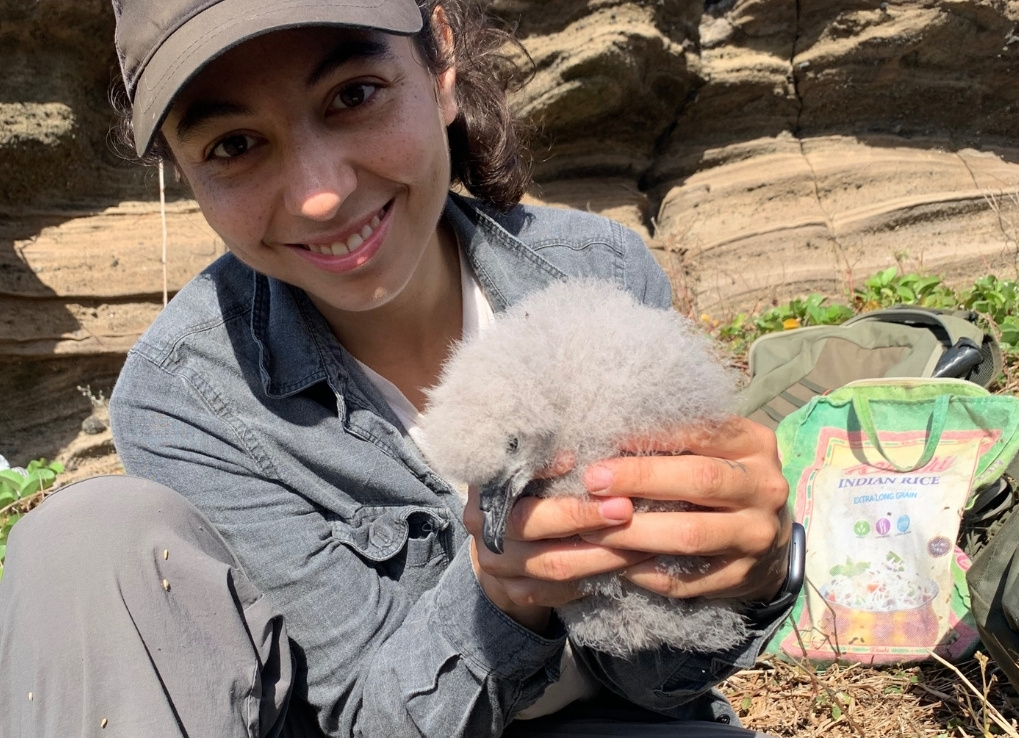
Mariel holding a petrel chick. Photo: D. Joyram.
Mariel has always had a deep relationship with nature and conservation, having grown up spending most of her time outdoors in parks. Pursuing this passion, Mariel studied in ecology and evolutionary biology at the University of Toronto, where she received both her Bachelors and Master of Science degrees. There, Mariel focused on being in the field as much as possible, travelling to Ecuador to work with lizards and spending an inordinate amount of time in Algonquin Provincial Park contributing to long-term monitoring projects. Mariel also co-founded and co-directs a grassroots organization called Field Research in Ecology and Evolution Diversified (FREED).

We need your help


