OSF breeding getting science-y
Posted onApril 2, 2020byAndrea Gielens|Fraser Valley Wetlands Wildlife, Oregon Spotted Frog

What is the Oregon Spotted Frog Recovery Program? Since 2010, WPC has been breeding the endangered Oregon spotted frog at the Greater Vancouver Zoo, and reintroducing thousands of tadpoles and froglets back into wetlands in B.C.’s Fraser Valley. It takes years of careful observation, collaboration, ingenuity and sometimes a little luck to crack the code to breeding specific species. For several years, our progress was very limited. But our team persevered. Today, WPC has pioneered breeding techniques that are turning the tide for this species.
We are in the thick of the Oregon spotted frog (OSF) breeding season and are taking this once-a-year opportunity to work on a pilot research project to try to assess the fertility of OSF in both captivity and the wild.
Our conservation breeding programs, in conjunction with Greater Vancouver Zoo, Vancouver Aquarium and Toronto Zoo, have been working for many years to develop breeding strategies that work with the OSF’s unique natural biology. While we have worked with genetic management, breeding timing, temperatures, breeding behaviours, and sex ratios we have had sporadic success with actual fertility and reproductive output.
We have solved so many pieces of the puzzle of breeding this species yet yearly we seem to have widely varying egg mass fertility, with from 0-95% of each individual egg mass being fertilized.
For the 2020 breeding season we wanted to focus our efforts in developing field techniques for assessing sperm abundance and quality on OSF, as a first step to understanding this complex issue. With the help of Paula Mackie, researcher from Toronto Zoo, and Pourya Sardari, potential grad student, four days were spent intensively training, visiting conservation breeding and wild sites, and assessing our ability to complete the work and assess the samples.
Day 1: Pump up the hormones
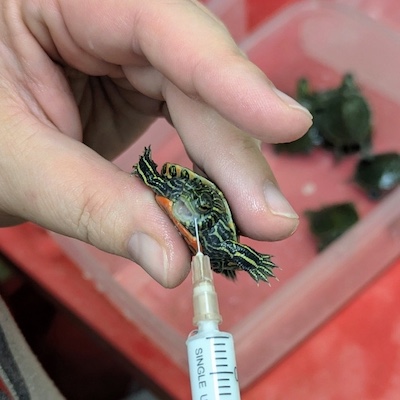
The first day was spent training at Greater Vancouver Zoo in subcutaneous injections of hormones needed to induce the male frogs to release sperm for collection, as opposed to when they would naturally during breeding. Once collected the samples were assessed for motility, progression – how they move forward – and concentration.
Day 2: Taking it to the field
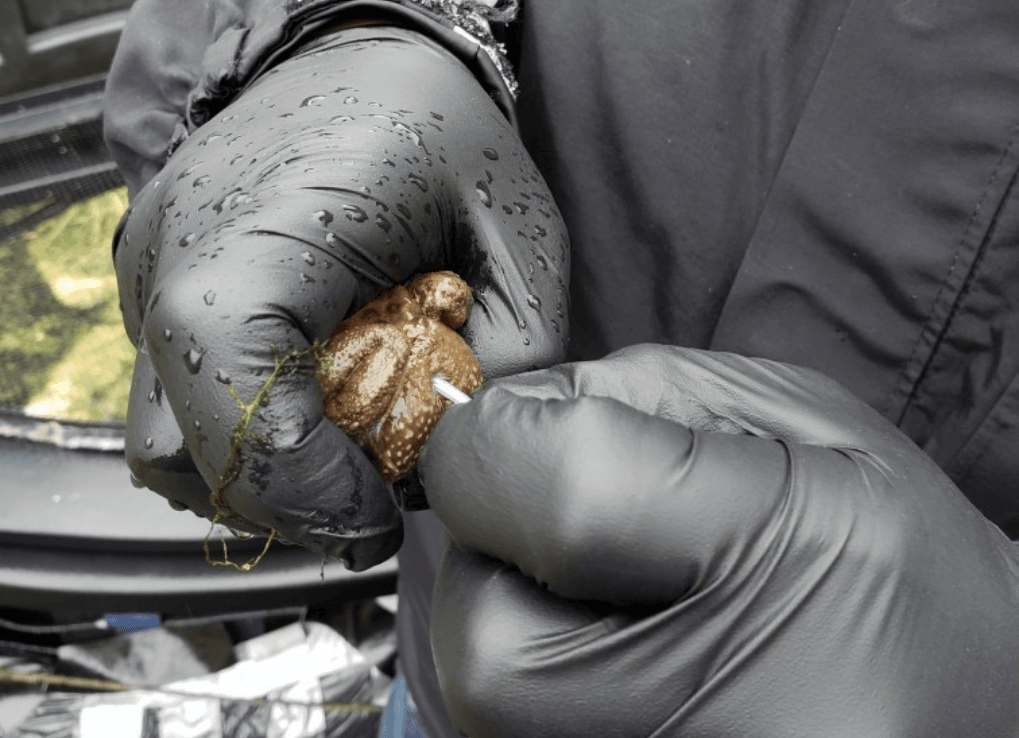
The second day was spent field-testing the logistics of wild collection from males that were trapped during our yearly mark-recapture work. Again samples were collected and assessed for preliminary assessment of sperm quality.
Day 3: Samples from the captive frogs
Day three was spent collecting similar samples at Vancouver Aquarium which were assessed preliminarily as well as quantitatively. Samples were also retained for additional work to be done on day four.
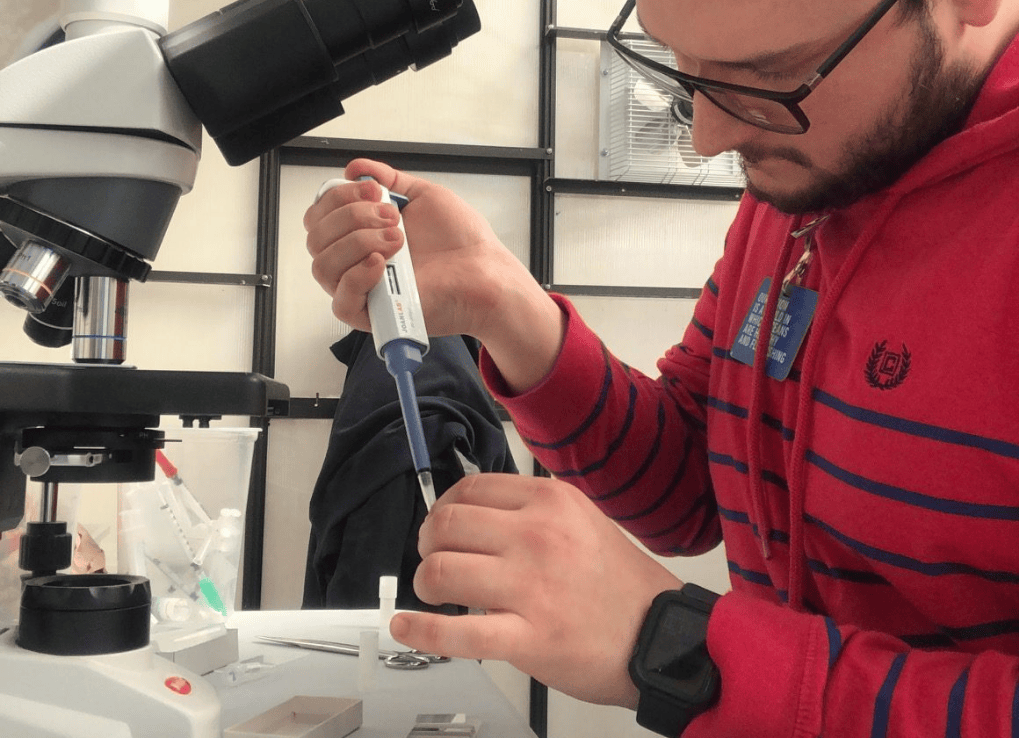
Analysis of samples for mortality, concentration, and progression.
Day 4: Sperm sorting
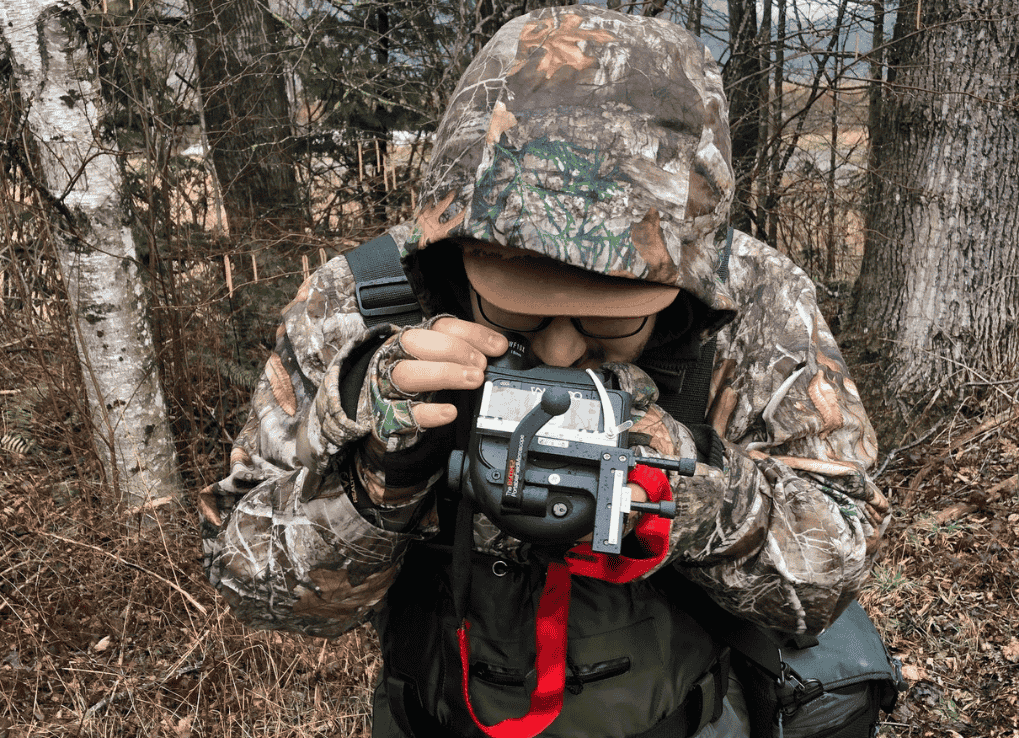
On the fourth and last day, fresh samples were obtained by Pourya from Greater Vancouver Zoo which, in conjunction with the Aquarium samples from day three were taken to Simon Fraser University for assessment using fluorescent microscopy. Using these techniques and specialized staining we can assess live/dead concentrations, which showed more than 80% live.
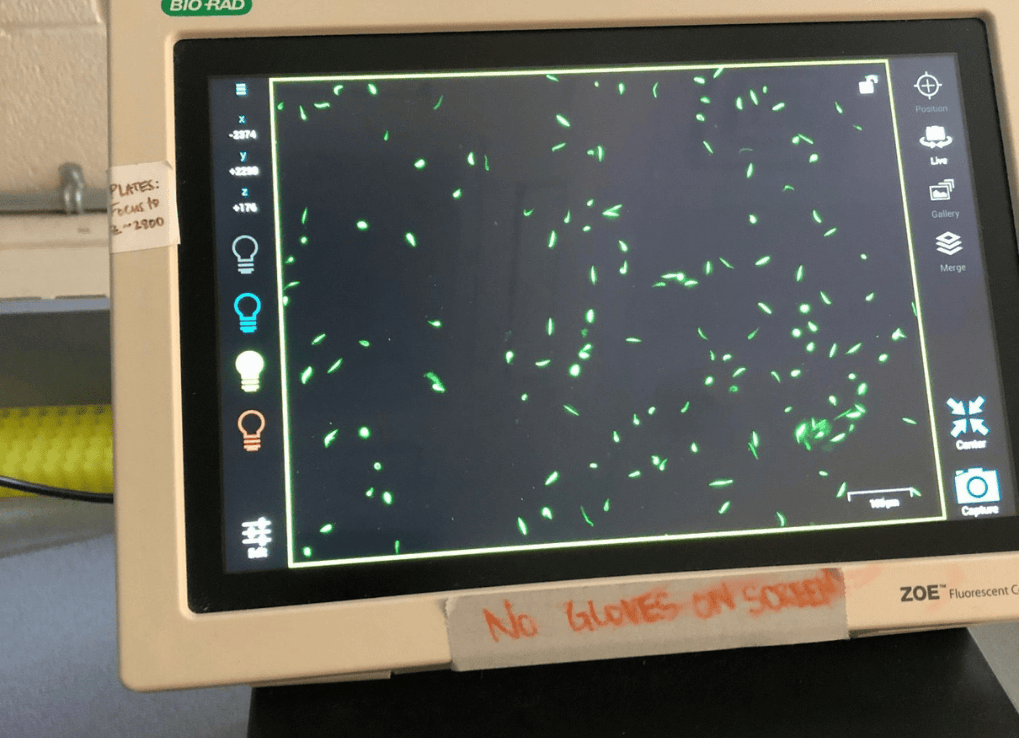
Using fluorescent microscopy to count live versus dead sperm.
A successful week of sperm science!
Overall a great amount was accomplished during such an intense and brief learning period. Pourya continues to collect samples to hone his techniques as well as look at the logistics of sampling individuals multiple times over the breeding season.
What we learned about pharmacokinetics, storage of samples, assessment of quality of samples in wild versus captive individuals and across facilities, as well as the logistics of completing this research across facilities and wild sites, has greatly informed us on expanding future work next breeding season.
Bring on the grad students of 2021!!
Andrea manages WPC’s captive breeding and release programs for the Oregon spotted frog and the coastal western painted turtle. Andrea has studied at-risk reptiles and amphibians in Canada and abroad, including a term at the Durrell Wildlife Conservation Trust in Jersey. Andrea also manages the Taylor’s checkerspot butterfly recovery program in B.C.
We need your help