Frog is possible
Posted onMay 12, 2026byDaryn Farrant
What is the Canada’s New Noah Program? Since 1988, the Canada’s New Noah program has provided conservation biologists in Canada the opportunity of a lifetime. Each year, WPC selects a dedicated biologist from applicants across Canada to undertake a 3-month course at the Durrell Conservation Academy in the U.K. followed by a 6-month internship on the island of Mauritius in the Indian Ocean. This is an opportunity unlike any other for young Canadians to learn firsthand how the world’s most successful conservation recovery programs are managed and to bring this knowledge and experience back to improve Canada’s conservation capacity.
For the first time ever, WPC is offering this placement to two biologists. Our 2026 New Noahs are Jenna Kissel – WPC’s 35th Canada’s New Noah, and Daryn Farrant – WPC’s 36th Canada’s New Noah. Both report on their experiences and how they will apply them upon return to Canada. Thank you to the Alan & Patricia Koval Foundation for their many years supporting the Canada’s New Noah Program and for going above and beyond supporting two Koval Foundation New Noah Internships in 2026.
You’re a frog.
You’re sitting alone on a lily pad. You look to either side. More lily pads, each with a frog. In front of you is one empty pad. Just beyond it, another frog faces you. Behind her, six more frogs. You turn around. Six frogs sit behind you too.
A voice calls out: You all need to get to the other side.
There is a crocodile circling the water, watching closely, making comments in a British accent. The rules are simple but strict. One frog per lily pad. You can leap over a frog if there is a free lily pad behind it. You cannot move backward. Only forward.
You try. And fail.
You try again. And fail again.
The noise of croaking frogs makes it hard to think. Everyone has an idea. Everyone wants to move. At the edges, a few frogs start pushing pebbles around, trying to map the pattern visually.
Then on attempt four, something clicks. Everything becomes clear. The pattern, the sequence, the solution.
You’ve cracked it.
You try to explain, but the others cannot quite hear you or do not understand yet. Halfway through showing the solution, someone suggests trying something else. The flow breaks. Suddenly you are all back at the beginning.
Reset.
A small voice asks, “Is frog even possible?”
The answer comes back, calm and certain. “Frog is possible.”
So you breathe.
You trust yourself. You trust the process. You have seen the solution, you know it works. This time you hold your ground. You show the pattern step by step. Slowly, the others begin to follow.
One hop after another, you all make it across.
Frog is possible.

Now I know what you are thinking. This is not really about frogs.
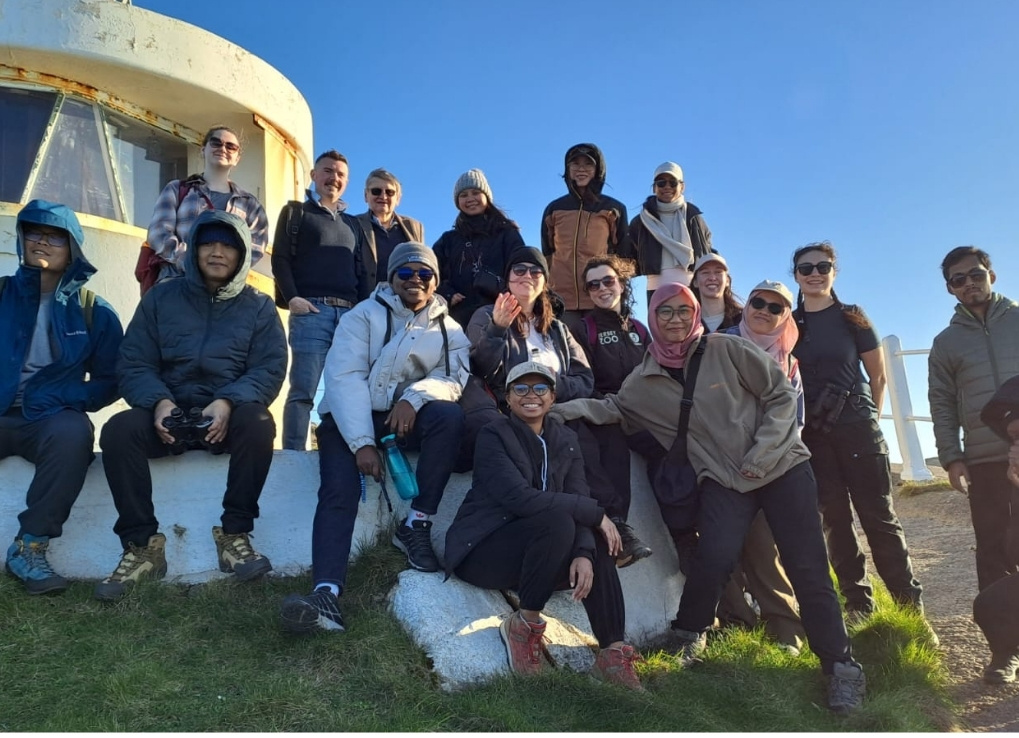
It is about my classmates from the DESMAN course at the Durrell Wildlife Conservation Trust and our crocodile of a teacher. This was our leadership training. Because leadership is not just about having the answer. It is about believing there is an answer in the first place. That belief matters.
In conservation, we face problems that can feel just as impossible as that puzzle. Declining species, habitat loss, limited resources. It is easy to get lost in the noise or to feel like you are starting over again and again. If you do not believe a solution exists, you will not find it, and you will not be able to bring others with you. Leadership starts with that belief.
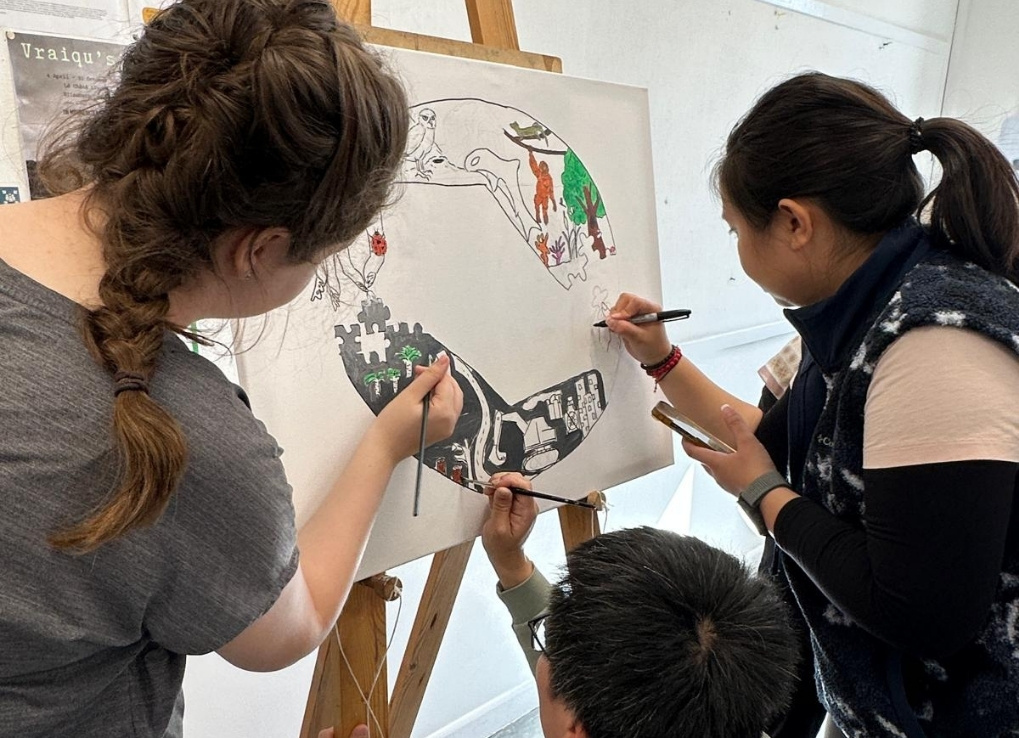
(Left to right) Daryn, Ash and Isabelle working on a group painting about what conservation leadership looks like to them. Photo by Cherry.
So who am I as a leader? I have often been thrown into leadership roles. It has always felt natural. When we were younger, my older brother would make me ask questions for him in public. Over time, that turned into being the person who speaks up and steps forward. But being a young leader is not always easy.
It can be hard to be taken seriously. Sometimes people feel threatened, especially when you are passionate and direct. I am still figuring out where the balance is between that fire and being too blunt. Between speaking clearly and how it is received. And sometimes I wonder if it is really about my delivery, or if it is shaped by internal expectations about what a leader is supposed to sound like. I am still learning and I’ll never stop.
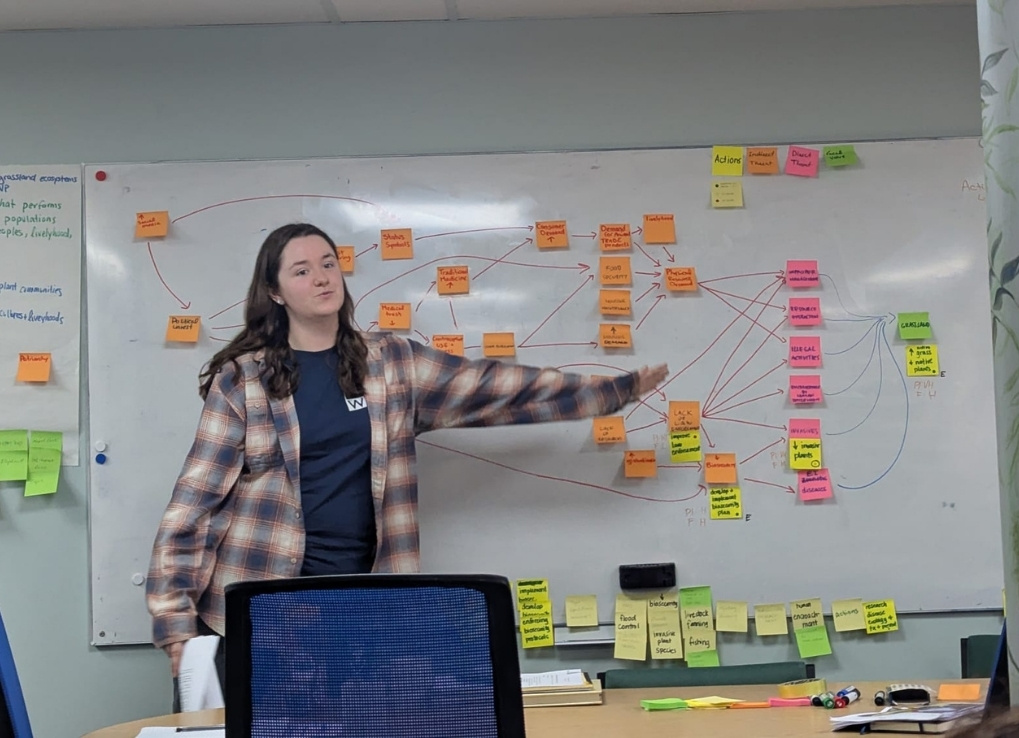
Daryn presenting a causal flow diagram on the threats to grassland plant communities. Photo by J.Kissel.
As I write this, I am sitting in the library at the Durrell Wildlife Hostel, in Gerry’s chair. Gerald Durrell built something extraordinary. It is easy to see people like him as larger than life. A visionary, a founder, a leader. But he was also just a person with ideas, doubts, and the willingness to act on them.
And behind every strong leader is someone making things work. Someone organizing, planning, and turning ideas into reality. For Gerald Durrell that was Lee Durrell, Jeremy Mallinson, John Hartley, Quentin Bloxam and a dedicated team that believed in those ideas, “Durrell’s Army”. Leadership does not look one way. Some people lead from the front. Others work behind the scenes, making sure everything holds together. We need both.
Looking around at my classmates, I see many different kinds of leaders. Some will go on to lead major conservation projects in their home countries. Others will quietly make those projects possible. Both are essential. Because getting to the other side, whether it is frogs on lily pads or real conservation challenges, takes a team. It takes belief. It takes patience. And sometimes it takes someone willing to say, and mean it, Frog is possible.
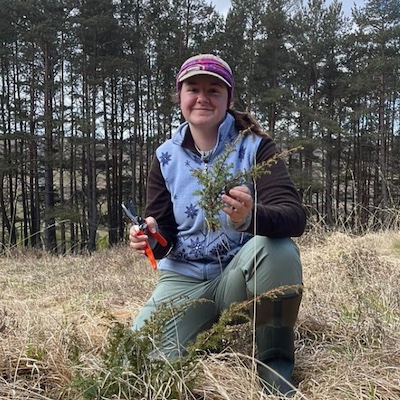
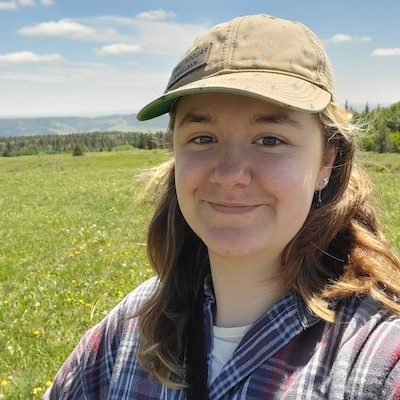
Daryn is a conservation biologist and the 36th Canada’s New Noah. She holds an Honours Bachelor of Science in Biological Sciences from the University of Manitoba, where she focused on restoration ecology and prairie ecosystem recovery. Prior to joining WPC, Daryn worked with Parks Canada at Grasslands National Park, leading monitoring programs for Burrowing Owls and riparian health, and coordinating fieldwork, data management, and species-at-risk surveys. She brings a range of field experience in invasive species management and ecological monitoring, and is passionate about long-term stewardship and making science accessible to diverse audiences. Daryn is bilingual in English and French and is excited to contribute to endangered species recovery in Canada through her work with WPC.
We need your help