The secret life of mottled duskywings
Posted onJuly 20, 2026byMaddy Neumann|Mottled Duskywing Butterfly, Native Pollinator Initiative, News and Events
What is the Mottled Duskywing Butterfly Recovery Program and the Ontario Butterfly Species at Risk Team? The Ontario Butterfly Species at Risk Team is comprised of a collaborative and multi-disciplinary group of individuals with representatives from academia, non-government organizations, federal & provincial government, the private sector, conservation authorities, and First Nations. WPC is an active member of the Ontario Butterfly Species at Risk Recovery Team, a collaborative, multi-disciplinary group which has been leading monitoring, habitat restoration, conservation, and research activities for mottled duskywing since 2017.
It’s a warm June day. Like all the best June days, there are a handful of butterflies in my car. Their movements are slow and sleepy; their environment is cool and dark. They don’t know that they are precious cargo, about to undergo an unusual commute.
Under the hum of the car, under the asphalt, the land is changing. Sparse, rocky outcroppings give way to flat, sweeping fields. The mottled duskywing butterflies in the back seat are traveling a distance they could not fathom on the power of paper-thin wings no bigger than a coin. They are being transported to the conservation lab at Cambridge Butterfly Conservatory, where they are treated to several square (liquid) meals a day and all the host plants they could dream of. Their eggs are collected daily, and their offspring gently raised by hand.
When the time is right, this trip is made in reverse. We return a portion of the hand-reared mottled duskywing to their maternal population. Others are sent elsewhere in the province, to forge ahead as part of Ontario’s first butterfly reintroduction. At Pinery Provincial Park and in Norfolk County, due to a massive effort from an extensive team of collaborators, the mottled duskywing is in flight again for the first time in decades.
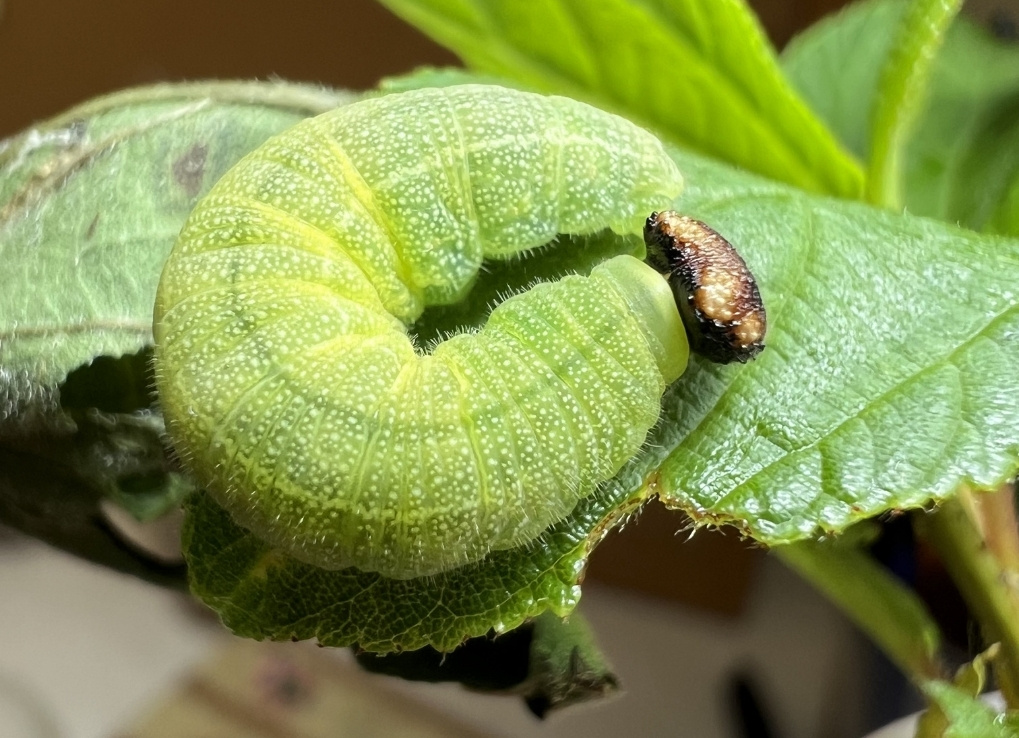
A mottled duskywing caterpillar sits curled up on a host plant. Photo: M. Neumann.
The caterpillars in the conservation lab are unaware of all this. They are very hungry, just as the literature suggests. These caterpillars, newly hatched from tiny eggs, are at first so small they are barely visible to the naked eye. Day in and day out they are tended to, fed fresh cuttings of their favourite plant, and placed helpfully back in the leaf shelters they have fallen out of. With thousands of caterpillars in the lab, this is no small task, given that the youngest caterpillars are less than half a centimeter in length. Shepherding the caterpillars through this vulnerable stage gives them a crucial leg up on life.
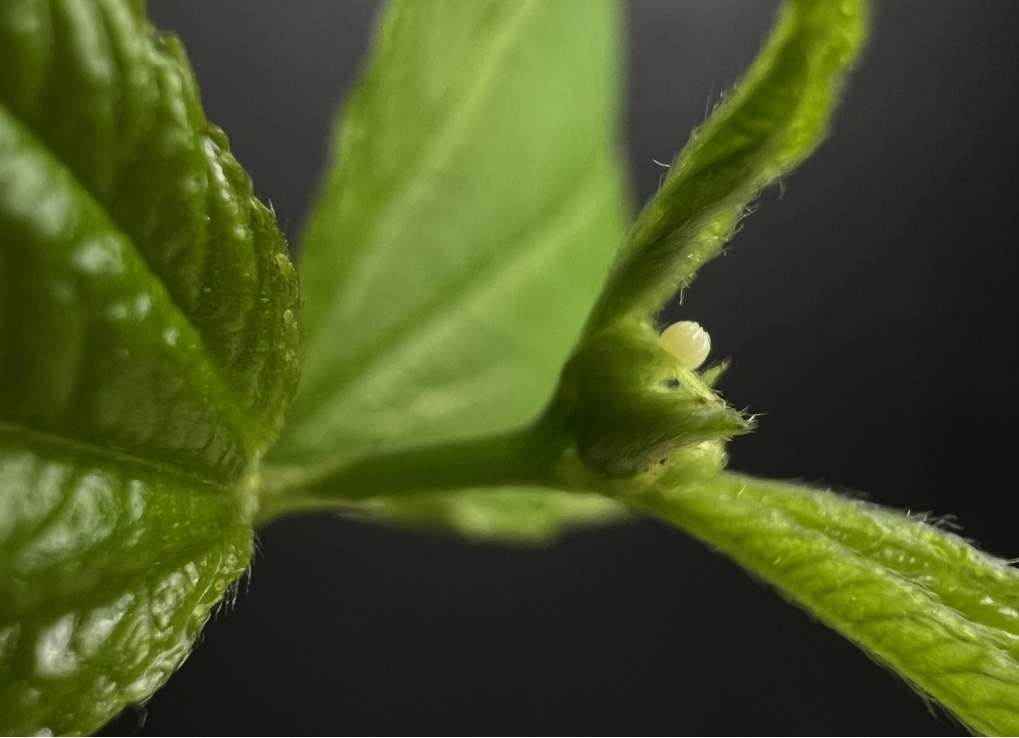
A tiny mottled duskywing egg sits on a host plant. Photo: M. Neumann.
Working in a conservation lab offers a unique vantage point into the lives of these endangered caterpillars. Very few people are fortunate enough to get a look behind the curtain at the day-to-day antics of this species. They are impressive architects: as a leaf-nesting species, mottled duskywing caterpillars sew shelters made of leaves that protect them from predators and the weather. Some of our caterpillars build elaborate two-tier nests, while others chew a skylight in their ceiling. We sometimes observe home invasions between neighbouring caterpillars, and on rare occasions see caterpillars sharing a leaf nest, bunk-bed style.
If you’ve ever been so scared that you threw up, you have that in common with the mottled duskywing, who we now know utilizes defensive regurgitation as a caterpillar. It may seem crude, but put yourself in the caterpillar’s (many) shoes. Your carefully crafted leaf shelter shakes and the walls begin to shift, revealing a giant human eyeball peering at you from above. Naturally, you regurgitate a brilliant green goo, something you have never done before but are confident will leave predators trembling in fear. Your technique is perfect, and it works as intended: predators and lab staff alike are eager to give you space.
Lab technicians learn to use caution when opening containers for other reasons too. Mottled duskywing caterpillars are skillful flingers of their own frass (caterpillar fecal matter). Rather than muck up the interior of their carefully crafted home, a caterpillar will manoeuvre their rear end through a tiny hole in the nest in order to launch their frass at high speed. Many lab technicians are inadvertently struck by these projectiles; it’s all in a day’s work.
These caterpillars live their entire adolescence, charming bathroom habits and all, under careful observation. Some will pupate and be released as adults in summer, and many more will prepare to survive the winter as larvae, destined to emerge the following spring. After weeks of knowing attentive care, the mottled duskywing are left to their own devices.
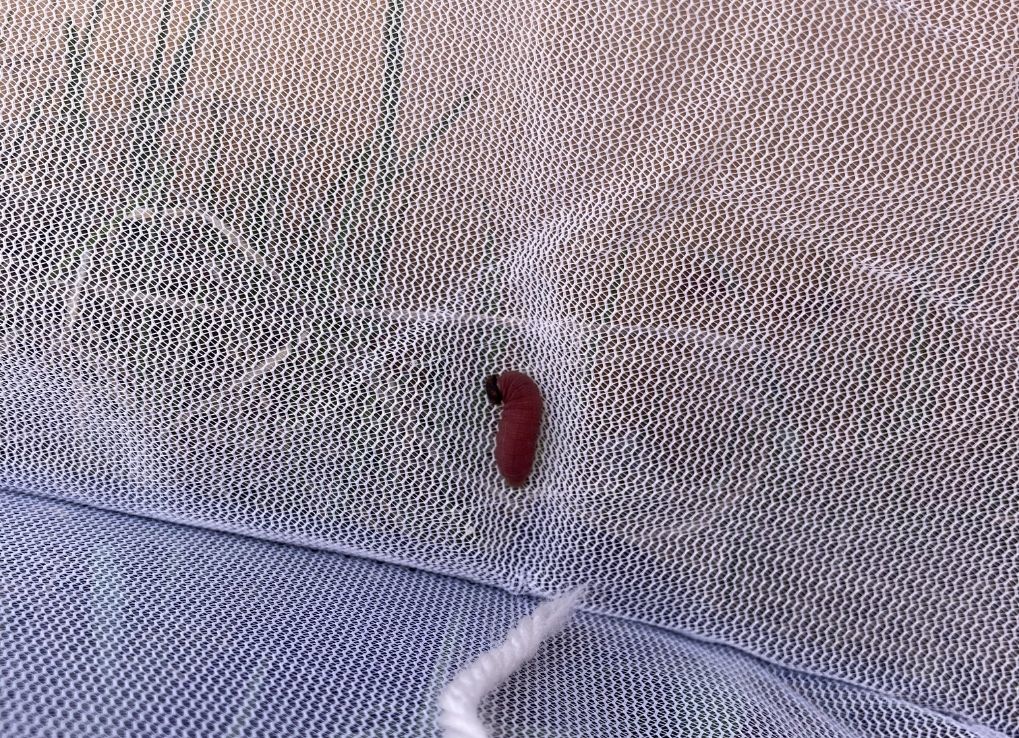
A caterpillar before chrysalis. Photo: M. Neumann.
In the spring, as the snow melts, the overwintered caterpillars begin to stir. Once lime green in colour, these individuals now range in hue from dusty pink to the colour of a raspberry popsicle. They will shed their caterpillar skin for the final time to form a chrysalis. Freshly emerged butterflies are marked and released at their new habitat: eligible new singles now ready to mingle. Once mated, a female can lay hundreds of eggs across her adult lifespan (several weeks to a month)– provided she locates the correct plant. Just as the monarch caterpillar famously feeds on milkweed, mottled duskywing caterpillars exclusively eat one of two host plants: prairie redroot (Ceanothus herbaceous) and New Jersey tea (Ceanothus americanus).
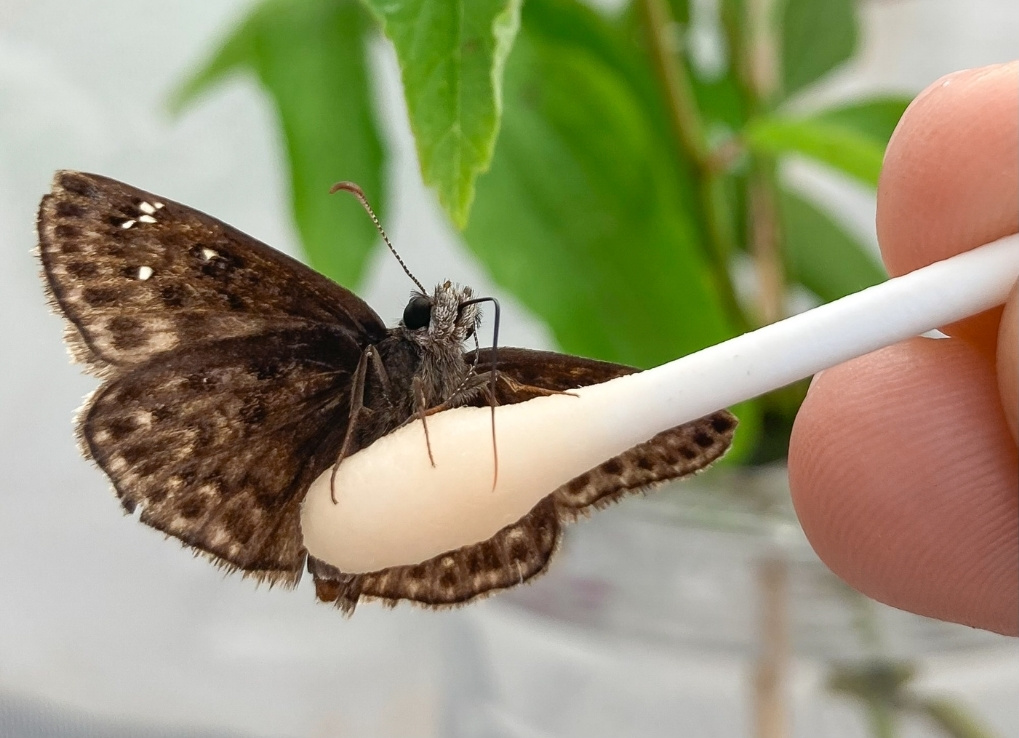
A mottled duskywing caterpillar sits on a cotton swab soaked in liquid food. Photo: M. Neumann.
The mottled duskywing butterfly and its host plants require rare habitats such as oak savanna, an ecosystem that is sustained by healthy fire. These globally imperiled grasslands have been kept healthy by Indigenous stewardship of the land, both presently and historically, using land management practices such as prescribed burns. Across much of the mottled duskywing’s range, however, years of settler fire suppression and habitat fragmentation made the mottled duskywing and its ecosystem a rare sight in Ontario. Interference of the wrong kind devastated this species: habitat levelled in favour of development, native plants outcompeted by invasives. The mottled duskywing went locally extinct across whole swaths of its historic range, and its absence pointed to a greater ecological problem. Today, habitat restoration is underway throughout the province to ensure the mottled duskywing is here to stay.
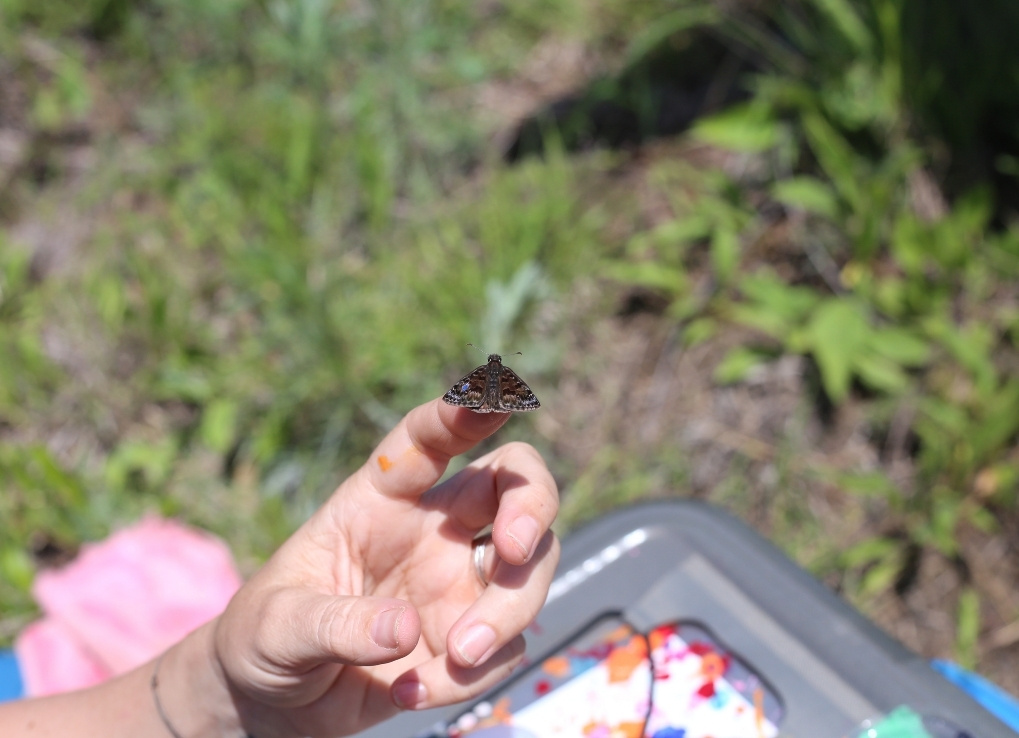
A mottled duskywing butterfly before release into the field. Photo: M. Neumann.
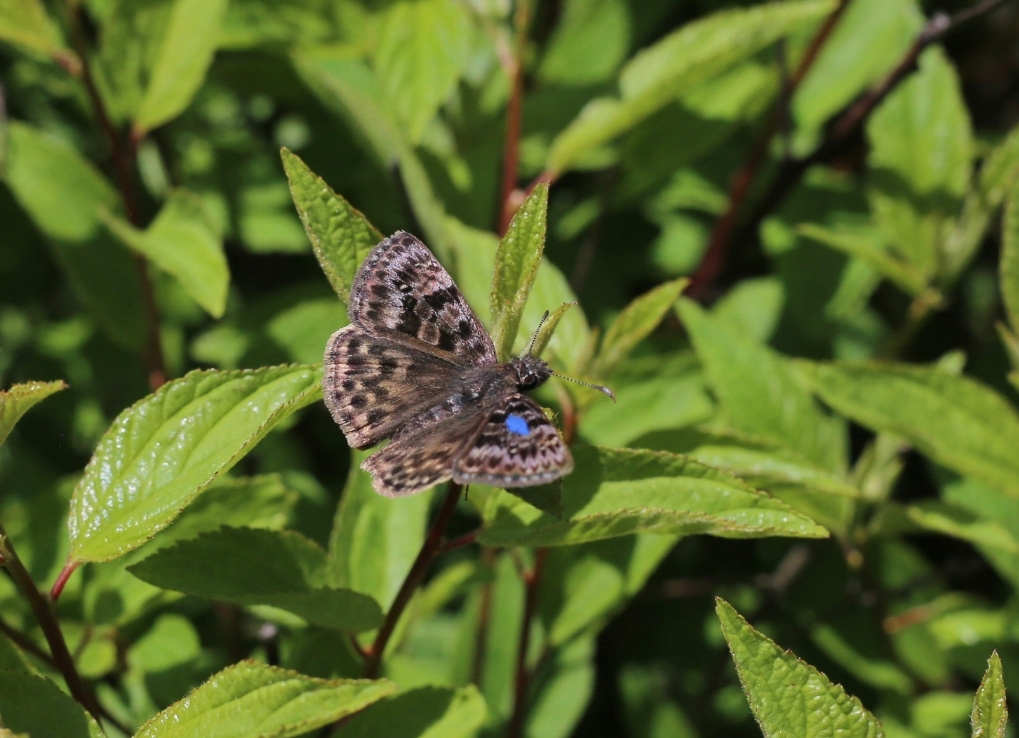
Come next spring, somewhere in a stewarded grassland, there will be a tiny brown butterfly with fuzzy salt-and-pepper cheeks like a teddy bear. Its wings are striking: satiny dark and mottled, with a lavender sheen if you’re looking in the right light. Unbelievably, on close inspection, it has cartoonish eyelashes and tufts of what can only be described as tiny baby hairs atop its head. It is easily mistaken for other species, or missed entirely against the vast open landscape which it calls home. Despite its inconspicuous appearance, the mottled duskywing is captivating in its own right.
Spending a summer caring for an endangered butterfly is an exercise in viewing the world on a smaller scale. It is a chance to honour the place of a single tiny animal and the irreplaceable role it holds in its ecosystem. This remarkable species will persist in Ontario if we continue to give it, and its habitat, a fighting chance– and a future with mottled duskywings is a future I want to see.
Maddy’s passion for Ontario tallgrass ecosystems was cemented early in life thanks to a childhood spent adjacent to restoration efforts such as prescribed burns. This lasting impression carried forward into their career working with at-risk species and habitats, allowing them to nurture a lifelong affinity for environmental stewardship. In their role as the enthusiastic senior supervisor of the butterfly conservation lab, where they have worked with the Mottled Duskywing since 2019, Maddy is responsible for a program that rears thousands of butterflies for release at suitably restored sites across Ontario. Maddy hopes their contributions to a more comprehensive understanding of the Mottled Duskywing and its life history will inform rearing protocols for future Lepidoptera recovery efforts, making possible the successful reintroduction of other oak savanna species. When not in the lab, Maddy can be found moving all manner of herpetofauna across roads, and teaching a contagious enthusiasm for the natural world to anyone within earshot (whether prompted or not).

We need your help