Crash course: shrike surveying
Posted onAugust 6, 2026byChristopher Barkwell|Eastern Loggerhead Shrike, Eastern Loggerhead Shrike Recovery, News and EventsPhoto: C. Barkwell
What is the Eastern Loggerhead Shrike Recovery Program? After a precipitous drop in the wild eastern loggerhead shrike population in the 1990s, Environment Canada invited Wildlife Preservation Canada to join the multi-partner recovery effort in 2001. Since then, the wild population size has fluctuated. Studies have shown that although the recovery effort has prevented the species from disappearing from Canada, more work is required to identify and address the causes of the species’ decline. WPC works to prevent the endangered eastern loggerhead shrike from disappearing by building the wild population in Ontario, and studying the species to learn more about the threats they face.
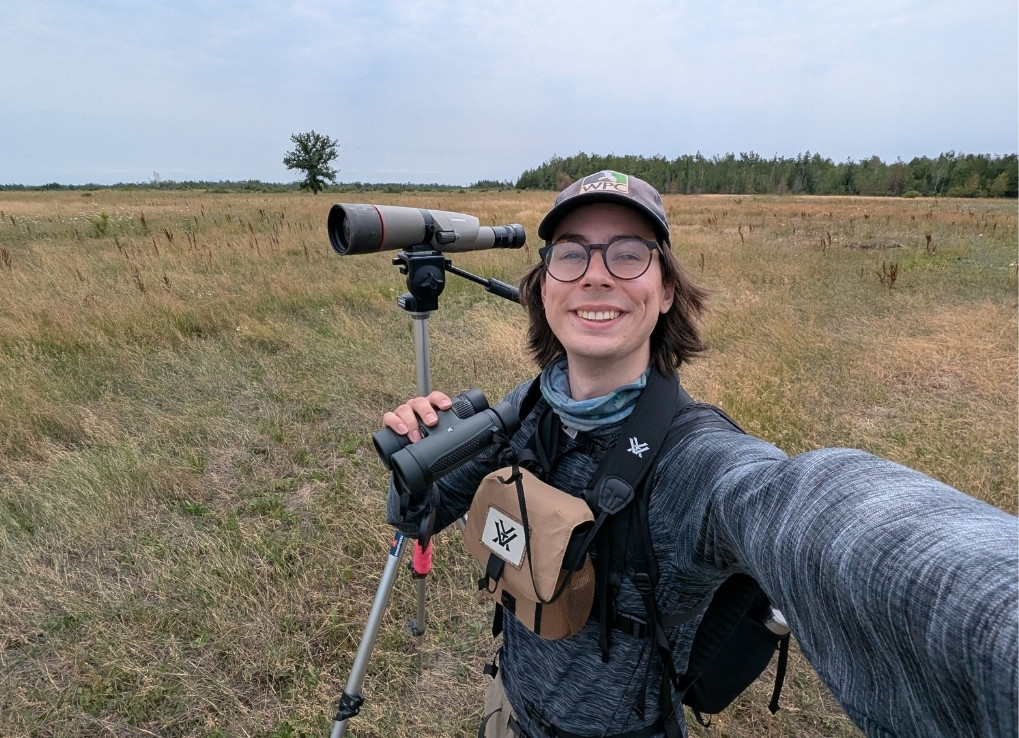
University of Guelph Master of Wildlife Biology Student Chris Barkwell spent the summer with Wildlife Preservation Canada’s Eastern Loggerhead Shrike Recovery Team, as part of the program’s hands-on training and skill development. WPC provides opportunities for Canadian biologists to increase their expertise, helping to build to this country’s conservation capacity, and is excited to provide a space for these students.
Part of the Eastern Loggerhead Shrike Recovery Program involves surveying and monitoring wild shrikes throughout the breeding season. Here’s what a typical day looks like and why it matters!
Field Safety Tips
Before any shrike surveying begins, staying safe in the field is key. A typical survey day is long and outdoors, so come prepared:
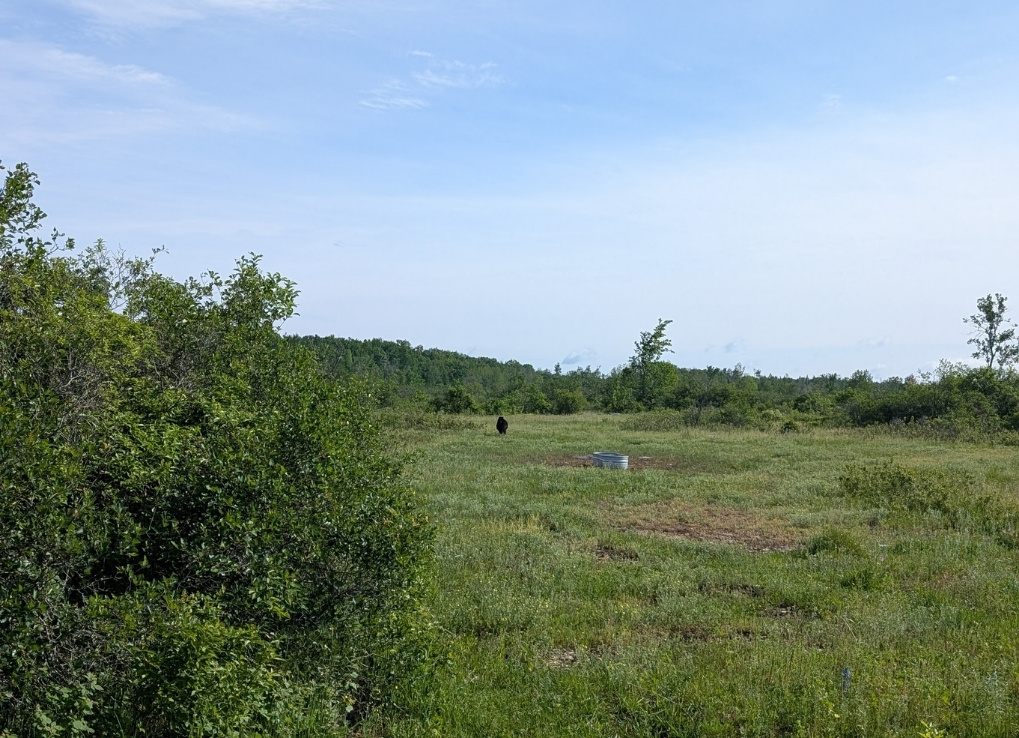
A bear running away after it saw me in the field. Learn how to be bear smart before heading into the field. Photo by C. Barkwell.
What is surveying?
Surveying starts in early May, when shrikes return to Canada for the summer. “Surveying” basically means heading out into shrike habitat and looking for these birds. WPC surveys two main areas: Carden Alvar and Napanee, the last two places in Canada where eastern loggerhead shrikes reliably come back to breed. WPC has mapped out patches of suitable habitat in both regions, mostly conservation lands and cattle pastures.
Shrikes are picky about where they live. They need:
Other helpful features include short grass (so prey can’t hide easily) and distance from human disturbance like busy roads because shrikes can be skittish towards human presence.
Additionally during surveys habitat is assessed to determine if it is still suitable because habitat changes over time. For example, if shrubs start taking over an open field, shrikes may no longer use it.
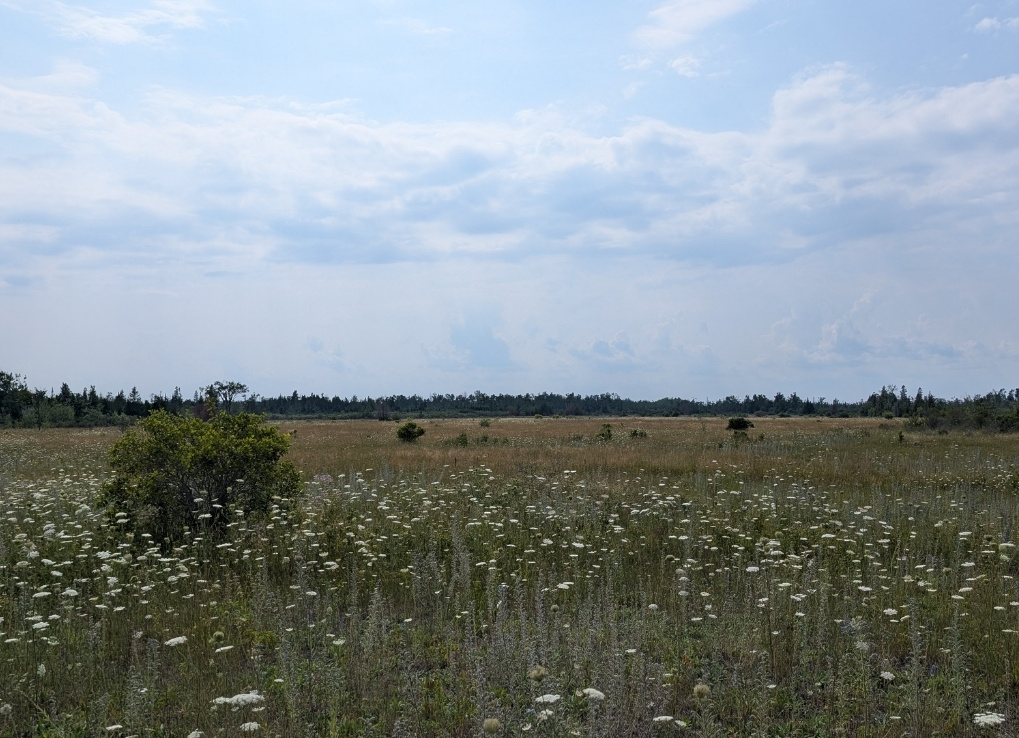
Conservation land in the Carden Alvar. This is a great example of habitat shrikes would like. Photo by C. Barkwell.
How do you find a shrike?
Finding a shrike is part skill, part patience, and part luck.
Confirming we’ve found a shrike!
Once we spot a bird that might be a shrike, grab your binoculars or scope; shrikes don’t usually let us get close. Remember they don’t like human presence!
Look for:
For a deeper dive check out WPC’s blog post on How to ID a loggerhead shrike. And if you do find a shrike, keep your distance, stay out of sight (behind a bush), and remain quiet. Shrikes are sensitive, and we want them to feel safe!
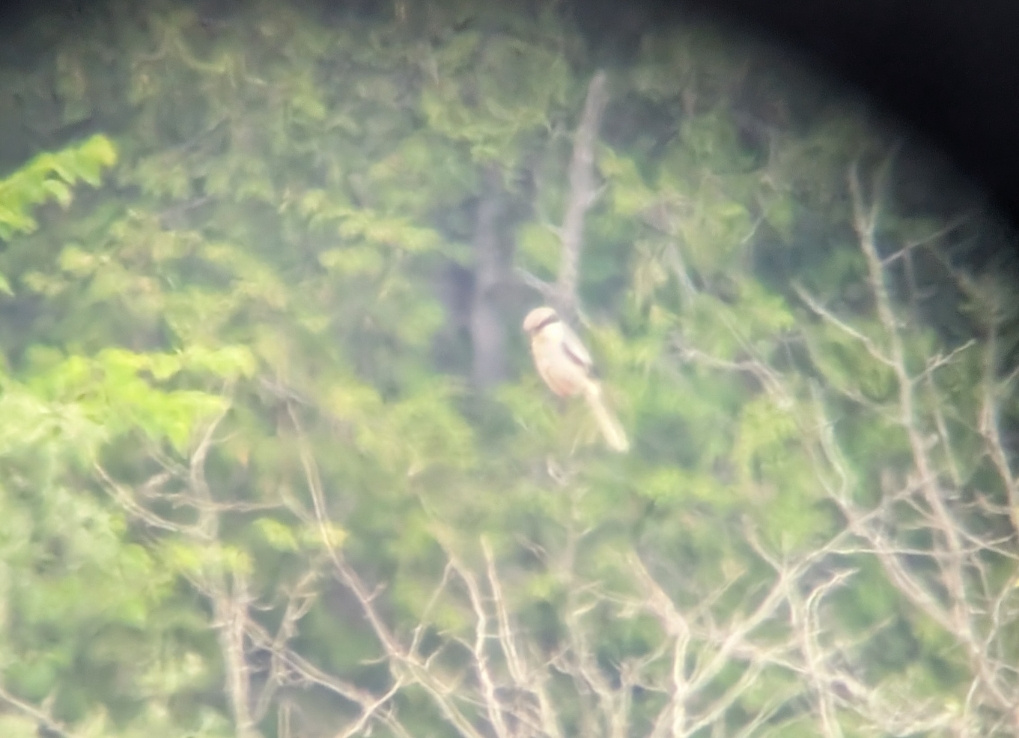
A loggerhead shrike perched far away. You won’t always get a good view of the shrike so it’s important to know those distinguishing features. Photo by C. Barkwell.
What is monitoring?
Once a shrike pair or individual is found, monitoring begins. Monitoring means regularly checking on known shrike locations and recording what the birds are doing. This is very important for breeding pairs because their behaviour tells us how their nesting is progressing.
During monitoring, staff look for things like:
These clues help determine whether a pair is establishing a territory, building a nest, incubating eggs, feeding nestlings, or caring for fledglings.
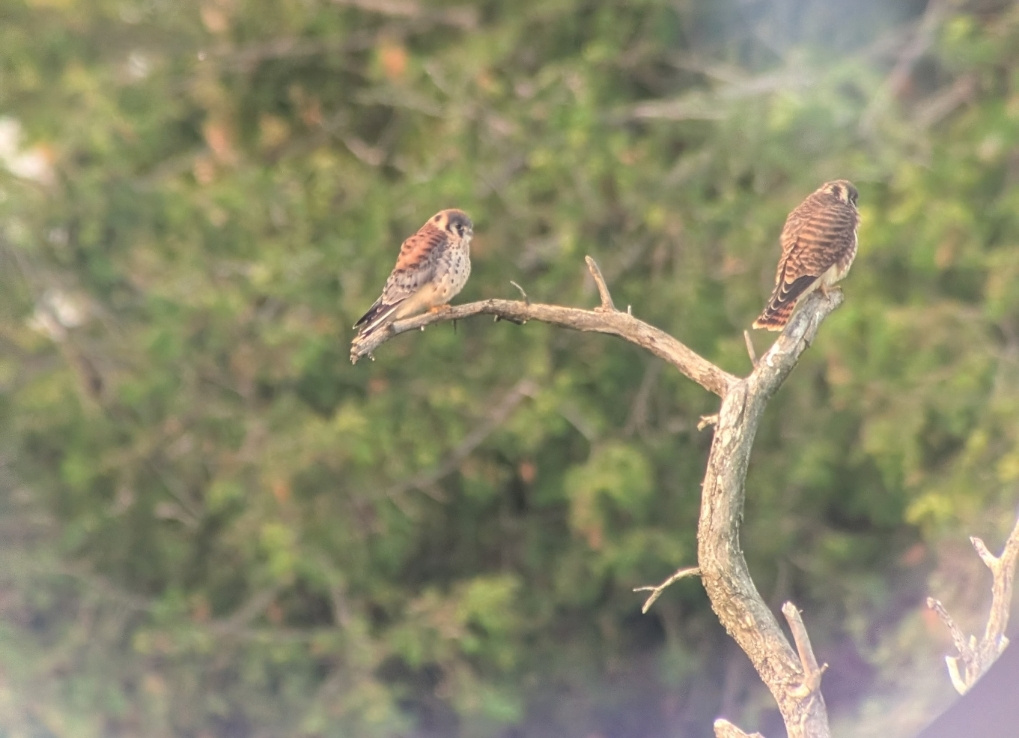
Two American kestrels perched. Kestrels will prey upon shrike nests and can eat their eggs, nestlings, or fledglings. Photo by C. Barkwell.
Banding shrikes
Sometimes shrikes are banded during monitoring. A bird band is a small ring placed on a bird’s leg. Shrike bands include:
If a banded shrike is seen again, it can tell us where it migrated for winter and whether it returned to the same breeding area the next year. During the banding process we also take a blood sample and feather sample. These samples give us insight into a bird’s genetics and can even tell us where birds migrate! Banding is done by trained professionals to reduce stress on the birds and prevent injury.
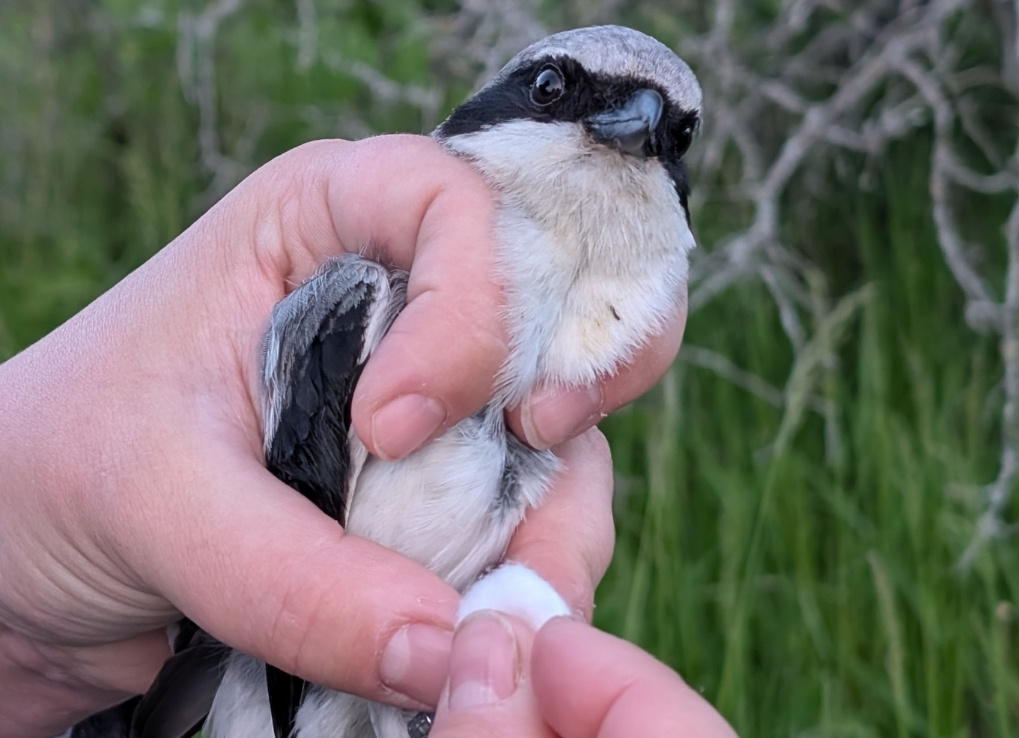
Banding of a wild loggerhead shrike, gauze is applied after a non-invasive prick is given to the shrikes foot to draw blood for a sample. After a few moments with slight pressure with the gauze, the bleeding stops and they’re ready to be released. Photo by C. Barkwell.
Nest checks
Nest checks involve using a small camera on a pole to take a photo of the nest. This helps determine how many nestlings there are and how old they might be. Nest checks should only be done by trained professionals, doing them incorrectly can cause parents to abandon the nest.
Why do we do all this?
Monitoring wildlife helps us understand population health: how many individuals there are, whether the population is growing or shrinking, and what threats they face (like habitat loss or new diseases). It also helps us understand normal behaviour for a species.
For the Eastern Loggerhead Shrike Recovery Program, monitoring guides other parts of the project, including the release of captive‑bred shrikes and land stewardship efforts. In short, monitoring tells us what shrikes need and how we can best support them!
Christopher is excited to join WPC as a Shrike Recovery Field Intern for his Master of Wildlife Biology practicum at the University of Guelph. With a passion for conservation and wildlife he has gained experience with aquatic invertebrates, species at risk songbirds, and small mammals. Originally from Manitoba, Chris is eager to explore Ontario’s natural landscape, learn more about the species here, and gain experience with the recovery of the loggerhead shrike.

We need your help