

One Way or another! A search for Ontario’s bumble bees
Posted onApril 16, 2020byPollinator Team|Blogs, Native Pollinator Initiative
What is the Bumble Bee Recovery Program? Since the 1990s, bumble bee numbers have been plummeting, and that spells ecological disaster. Ninety per cent of all flowering plants — including most of the fruits and vegetables in your fridge — need these pollinators in order to reproduce.
Until the causes of these declines can be reversed, conservation breeding and reintroduction is the only way to safeguard at-risk bumble bees. Today, WPC is the only organization in Canada rebuilding wild bee populations through conservation breeding. Thanks to recent breakthroughs, we’ve figured out how to dramatically increase the number of queens we produce. Once they’re released into the wild, they can establish their own colonies, producing hundreds of pollinators to sustain the ecosystems around them.
We are itching to survey for bees, but we are home keeping ourselves and others safe from COVID-19 so instead, we are reminiscing about bumble bee surveys from years past. Check out this little blog (and especially the video at the end!) to see what all the fuss is about and why we are sad our spring survey season is spent observing only in our own backyards. We hope everyone out there is staying safe too, and we hope you enjoy watching the bumble bees invade your properties in the coming weeks! Keep us posted on what you see using Bumble Bee Watch — follow this link for more information.
One Way, Or Another! A search for Ontario’s bumble bees
Each spring, the Bumble Bee Recovery Team sets out in search of bumble bees, especially the yellow-banded bumble bee (Bombus terricola), a species of Special Concern in Canada and a priority species for Wildlife Preservation Canada’s conservation activities. With teams stationed across the province, our crew spends weeks recording ecological information about our bumble bees and collecting yellow-banded bumble bee queens for use in our conservation breeding program. Visit our website to learn more about this species, and about how we are working to recover and conserve it and other bumble bee species at risk through our conservation breeding program.
While the search for bumble bees is generally a lot of fun, the search for the yellow-banded bumble bee can get stressful — sometimes we can go days (or even weeks!) without finding a single individual. At times it can feel discouraging, but we try to remind ourselves how lucky we are to work on such an amazing program, in some really beautiful parts of Ontario.
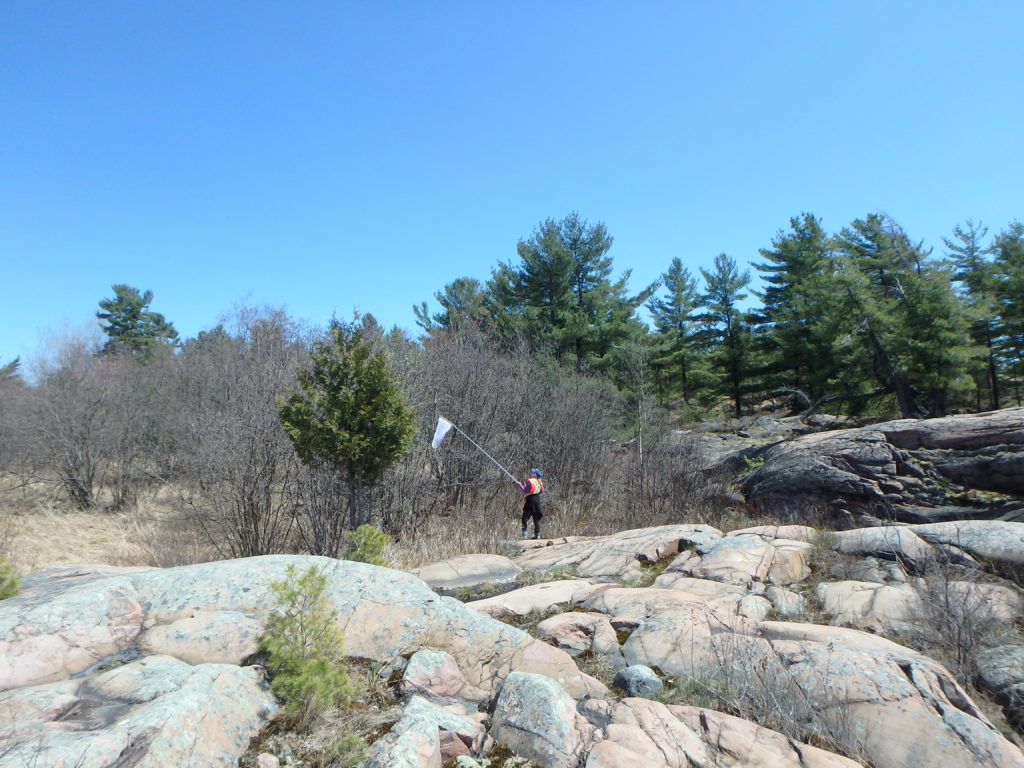
Hayley, Ontario Program Coordinator for the Bumble Bee Recovery Program, surveys for bumble bees at Killarney Provincial Park in Ontario. [Photo © V. MacPhail]
While surveying, our team often finds ourselves searching high and low, and sometimes knee deep (or even waist deep!) in water. A favourite resource of many bumble bee queens in the spring are willows (Salix sp.), which are usually found growing in wetlands, damp meadows, and along shorelines. Thankfully, we use telescopic nets that allow us to reach flowers on the very tops of these trees and shrubs (which are quite often very tall)!
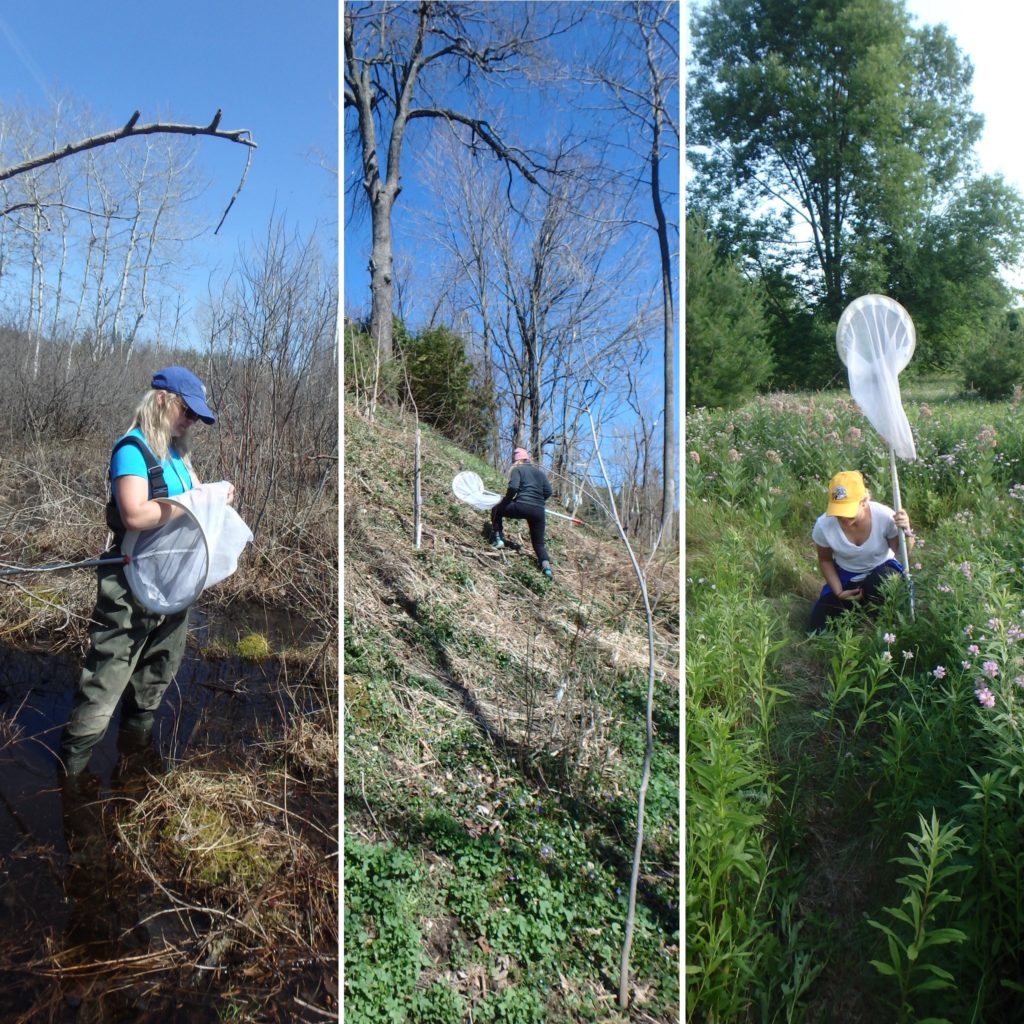
Hayley surveys for and collects bumble bees at various locations throughout south-central Ontario. [Photos © V. MacPhail]
Our crew wanted to give you a taste of what it’s like to survey for bumble bees, and how with a little determination, we always find the yellow-banded bumble bee — one way, or another. Enjoy this short video of one of our spring crews surveying in all kinds of places across Ontario (Song credit: One Way or Another, Blondie 1979).
Thanks for reminiscing with us! Stay tuned for more videos, blogs, and social media posts – you can follow all of WPC’s wildlife adventures on Facebook, Twitter, and Instagram!
– The Bumble Bee Recovery Team
Sorry, no posts matched your criteria
We need your help