The secret ingredient for seeing more birds? Bugs!
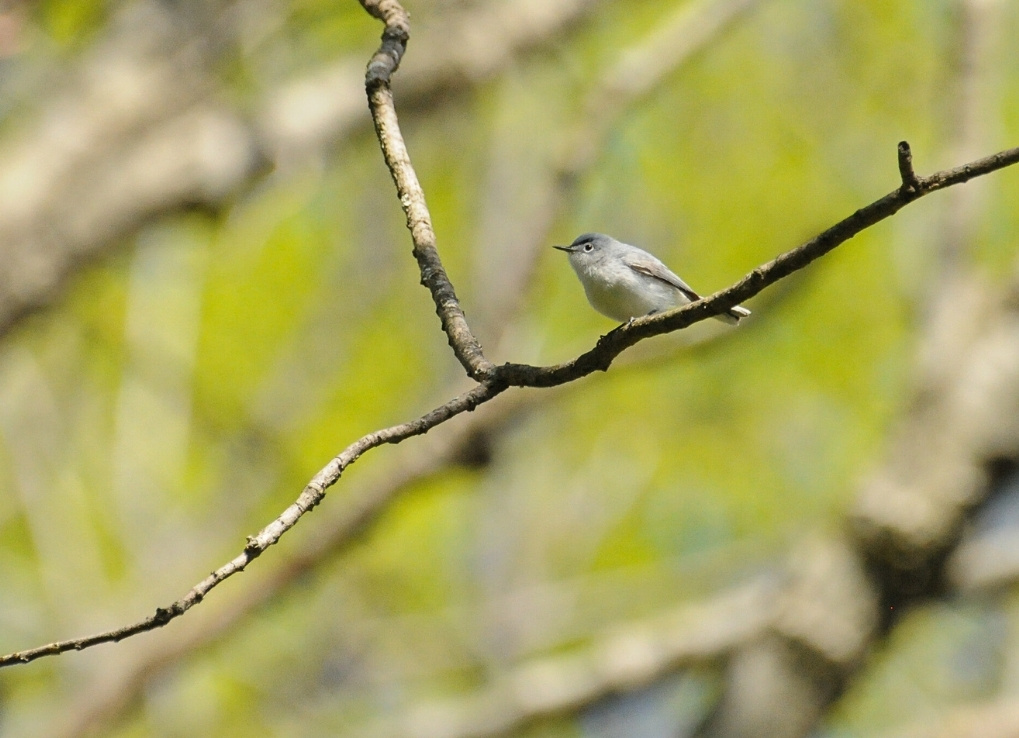
Posted onFebruary 19, 2026byAnnika Wilcox| Photo: this adorable, angry-looking bird is a blue-gray gnatcatcher - as its name suggests, it was on the prowl for small insects. Photo by Annika Wilcox.
What is the Bumble Bee Recovery Program? Since the 1990s, bumble bee numbers have been plummeting, and that spells ecological disaster. Ninety per cent of all flowering plants — including most of the fruits and vegetables in your fridge — need these pollinators in order to reproduce.
Until the causes of these declines can be reversed, conservation breeding and reintroduction is the only way to safeguard at-risk bumble bees. Today, WPC is the only organization in Canada rebuilding wild bee populations through conservation breeding. Thanks to recent breakthroughs, we’ve figured out how to dramatically increase the number of queens we produce. Once they’re released into the wild, they can establish their own colonies, producing hundreds of pollinators to sustain the ecosystems around them.
Most people I know love birds. We put up feeders, learn their songs, bring binoculars everywhere, and divide our years into “Before Spring Migration” and “After Spring Migration.” Birds are charismatic, colourful, and to put it frankly, easy to root for. Bugs, on the other hand, don’t always get the same warm reception. They’re often ignored, misunderstood, or actively disliked.
I get it. I came to love bugs the same way many people do: by accident, while looking for birds.
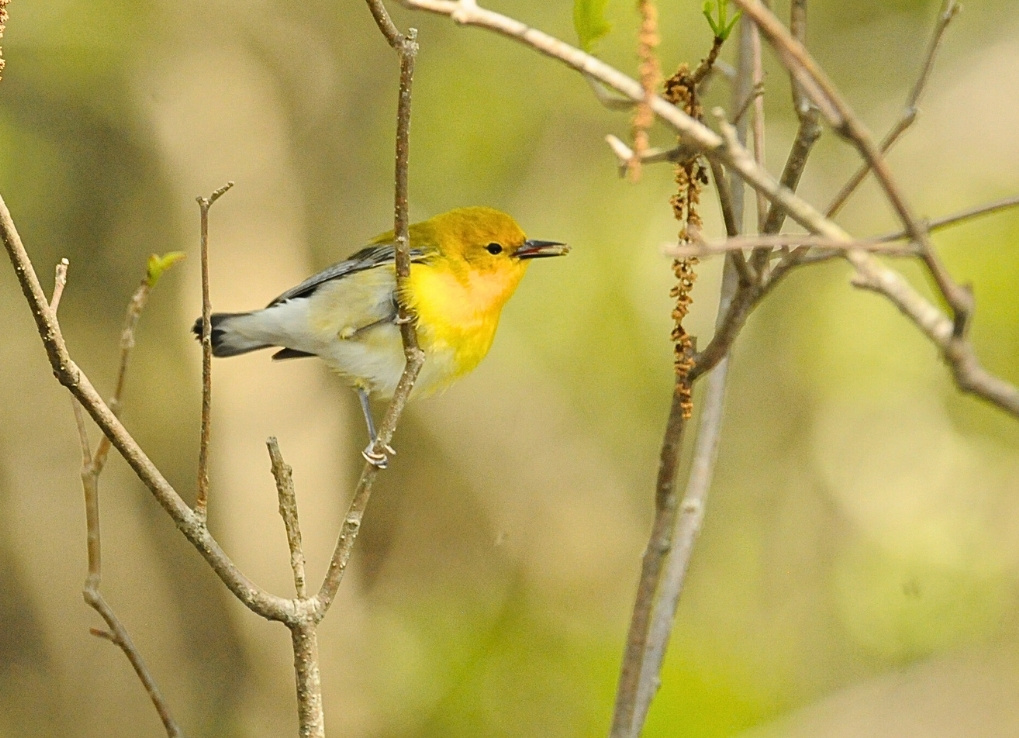
Prothonotary warbler making quick work of a small spider. Invertebrates make up almost the entirety of this endangered species’ diet. Photo by Annika Wilcox.
I’m an avid birder, and for many years my attention when out in the field was firmly fixed upward. But over time, I started noticing not just what kinds of birds were around, but also what they were actually doing. They weren’t just singing and flying around; they were probing beneath flakes of tree bark with their beaks, digging in leaf litter on the ground, and making quick, precise flights in pursuit of creatures much smaller than themselves. Insects, it turns out, are very much on a bird’s mind.
There’s a reason for all this – insects are foundational to bird life. During the breeding season, most songbirds rely heavily on insects to feed their young. Caterpillars, flies, beetles, and even bees are packed with protein and nutrients that growing chicks need. Even birds we think of as seed-eaters, like American goldfinches and northern cardinals, often switch to insects when raising nestlings. If you want birds in your backyard, you need bugs first.
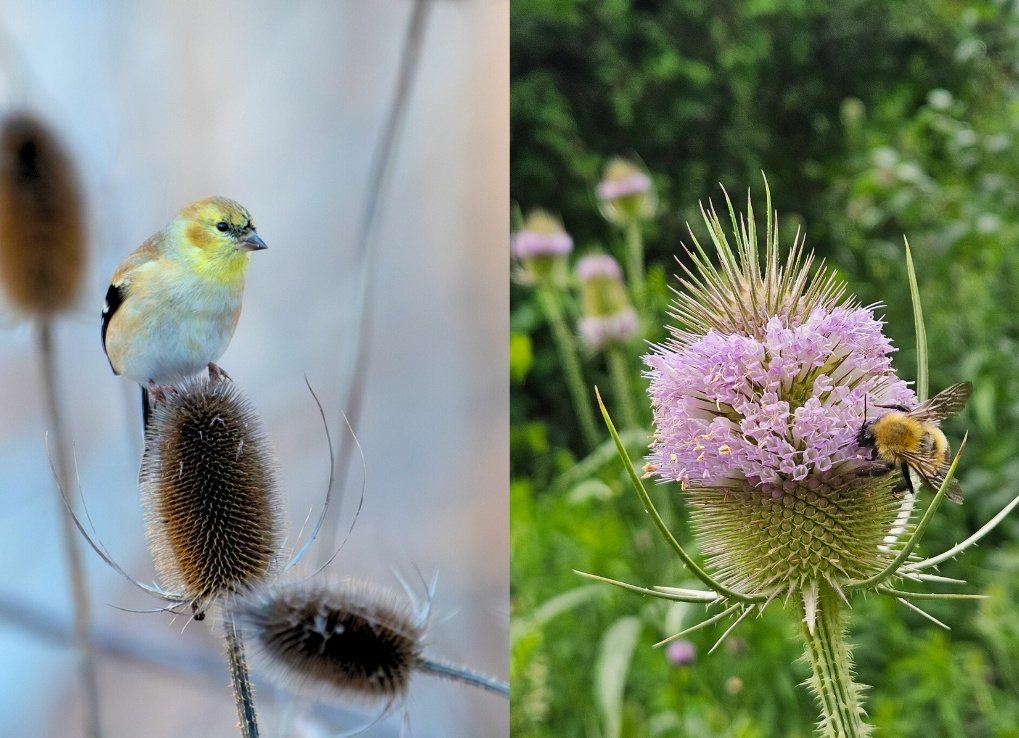
(Left) An American goldfinch feeding on the seeds of wild teasel (right) and a confusing Bumble Bee foraging for nectar from wild teasel flowers. Though this plant is not native, it illustrates how closely linked birds and pollinators are in their habitat requirements. Photos by Annika Wilcox.
This is where pollinators enter the story. Bumble bees are some of the most effective pollinators on the southern Ontario landscape, helping plants reproduce by moving pollen from flower to flower. They are particular powerhouses because they are active early in the spring, when few other insects are flying, and because they visit a wide variety of flowering plants. In doing so, bumble bees help sustain the plant communities that form the backbone of a healthy habitat. Those plants don’t just support bees; rather, they host caterpillars, beetles, and other insects that birds rely on. Later in the season, they produce the seeds and fruits that birds eat directly. When pollinators decline through habitat loss and pesticide use, the whole system begins to unravel.
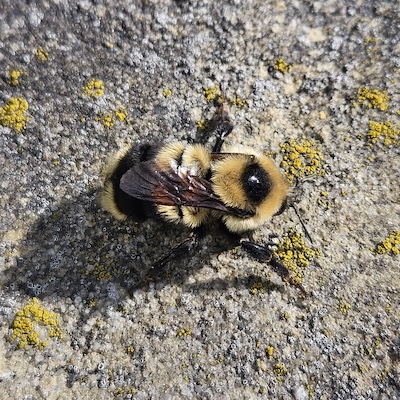
In addition to being some of our best pollinators, bumble bees are wonderful ambassadors for insects. They’re large, fuzzy, objectively cute, and relatively easy to observe, even if you don’t consider yourself a “bug person”. Watching a bumble bee methodically work its way through a patch of flowers can be just as engaging as watching birds at a feeder. And luckily for us, bumble bees often nest right in our own backyards, using undisturbed soil, grassy tussocks, or old rodent burrows.
One of the most meaningful shifts I’ve made in my bird-and-bug-loving life is thinking less about attracting wildlife with feeders and more about creating habitat. Instead of asking, “How do I bring birds here?” I now ask, “How do I support the insects that birds need?” That mindset naturally leads to pollinators, including my beloved bumble bees.
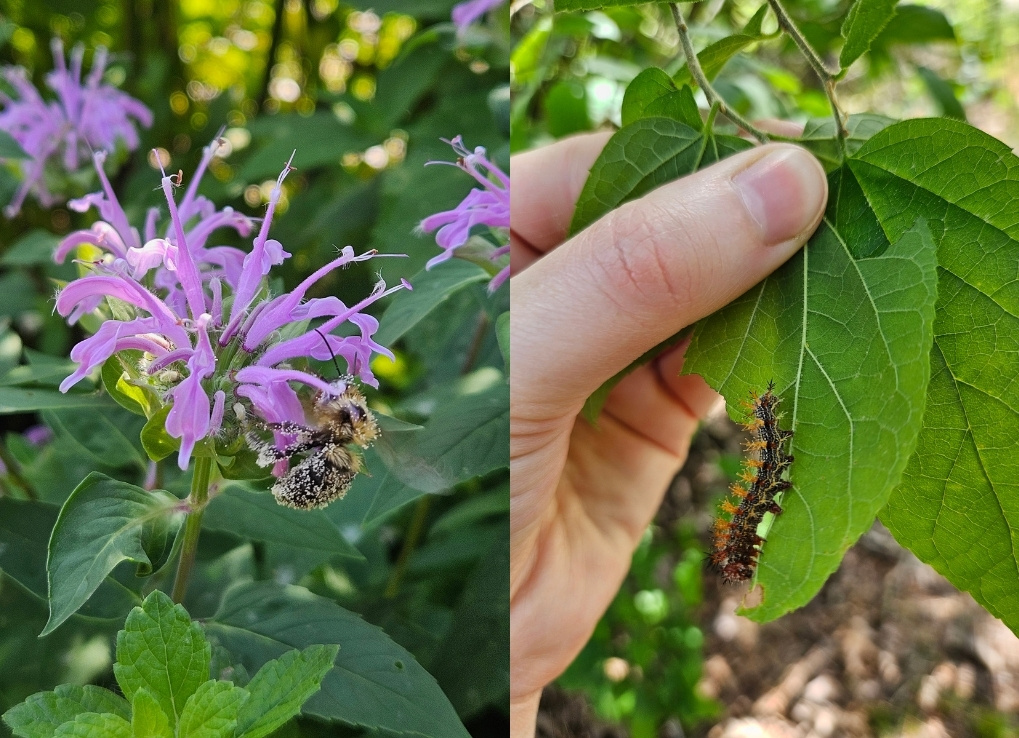
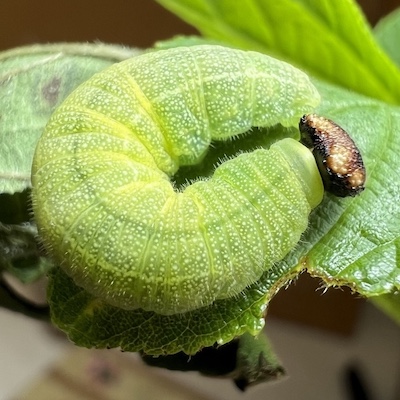
(Left) Grains of pollen stick easily to bumble bees’ fuzzy bodies, as shown by this bee completely dusted in pollen! This allows for easy transfer from pollen from one plant to another, making them such an efficient pollinator. Photo by Annika Wilcox. (Right) question mark caterpillar. A single songbird family can consume thousands of caterpillars during the breeding season! Photo by Annika Wilcox.
Don’t get me wrong – I’m not saying that you suddenly have to fall in love with every insect out there. But letting a little appreciation grow can make a big difference. Planting native flowers, minimizing pesticide use, and leaving some areas of your yard a bit messy creates space for pollinators to thrive. And when pollinators thrive, birds follow.

We need your help