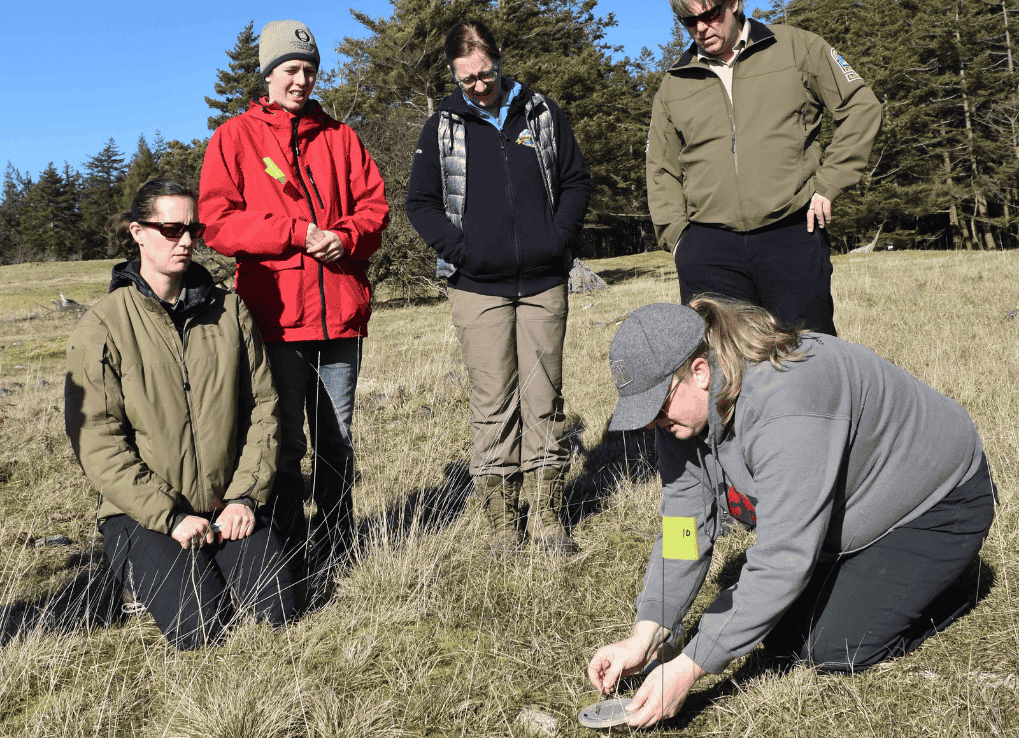
Taylor’s checkerspot release on Hornby Island
Posted onApril 8, 2020byAndrea Gielens|News and Events, Pollinators, Taylor's CheckerspotPhoto: Project Biologist Andrea Gielens demonstrates release technique for larvae to recovery team members.

What is the Taylor’s Checkerspot Butterfly Recovery Program? The Taylor’s checkerspot is listed as endangered in Canada, and considered a keystone species. An environmental indicator for the health of the entire ecosystem, this special butterfly was once widespread in the San Juan Islands, southern Vancouver Island and the surrounding islands of British Columbia. It was believed to have disappeared from Canada until 2005, when 15 checkerspots were observed on Denman Island in B.C.’s Gulf Islands. Since then, WPC has been working to support the checkerspot by building the wild population in B.C. through conservation breeding and helping partner efforts that restore and maintain habitat for the species.
It was a historic day in March in the conservation efforts to ensure a future for Taylor’s checkerspot butterflies in Canada.
786 Taylor’s checkerspot butterfly larvae were released!
Wildlife Preservation Canada was able to play a part in rearing and releasing these larvae to a restored historical population on Hornby Island, between Vancouver Island and mainland BC. This species, federally listed as endangered, hadn’t been seen on Hornby Island since the mid- 1990’s. Wildlife Preservation Canada initially partnered with local residents in 2013, and later, Greater Vancouver Zoo, for breeding and rearing of larva.
It takes teamwork!
The Taylor’s Checkerspot Recovery Team has worked tirelessly for over 10 years to reach this momentous goal. Butterfly experts from the British Columbia Ministry of Environment and Climate Change Strategy, University of British Columbia, and consultants on the Garry Oak Ecosystems Recovery Team began developing recovery strategies and plans for the species in 2005. Meadow habitat restoration is an important part of the process to ensure suitable habitat for the releases of the larvae and has been ongoing since 2015. British Columbia Parks staff and contractors conducted selective tree limbing and removal, and community volunteers, Horby Island Natural History Centre, local school children, and consultants from Saanich Native Plants have been weeding and installing native plants and seeds.
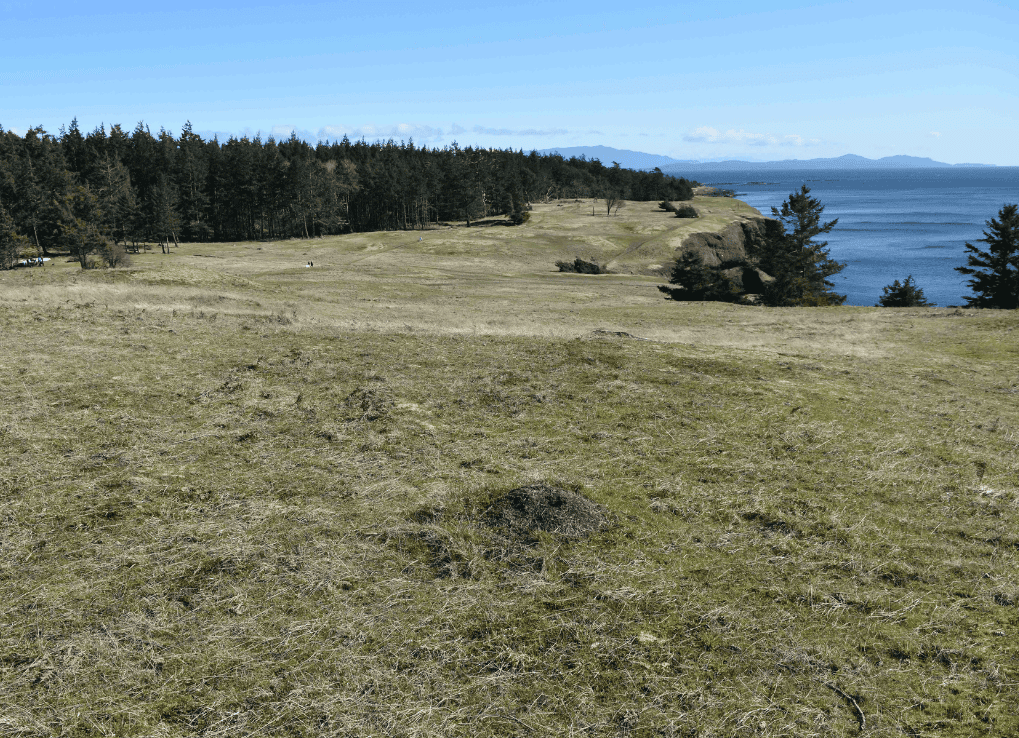
Helliwell Provincial Park has magnificent Garry Oak bluff habitat, ensuring the larva will have a beautiful view!
Restoration benefits many species
This recovery project benefits hundreds of species that range within the rare coastal bluff ecosystems of British Columbia. Although focused on Taylor’s checkerspot, other beneficiary species include dun skipper and about a dozen other range-restricted butterflies, western bumble bee, many native plants, western screech-owl and numerous other birds.
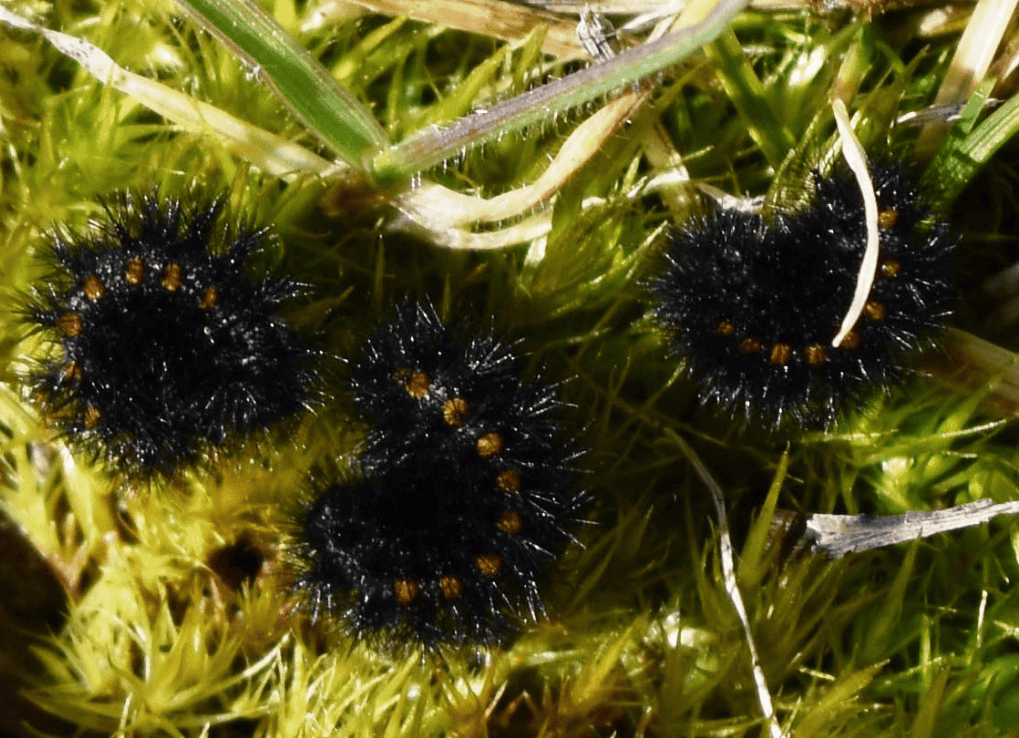
Larvae following release, getting accustomed to their new habitat.
As foundational as this release is to the establishment of a population on Hornby Island, our work here is far from done. We know that in order to establish a solid and self-sustaining population we will need to increase our release numbers dramatically and continue releases for many years.
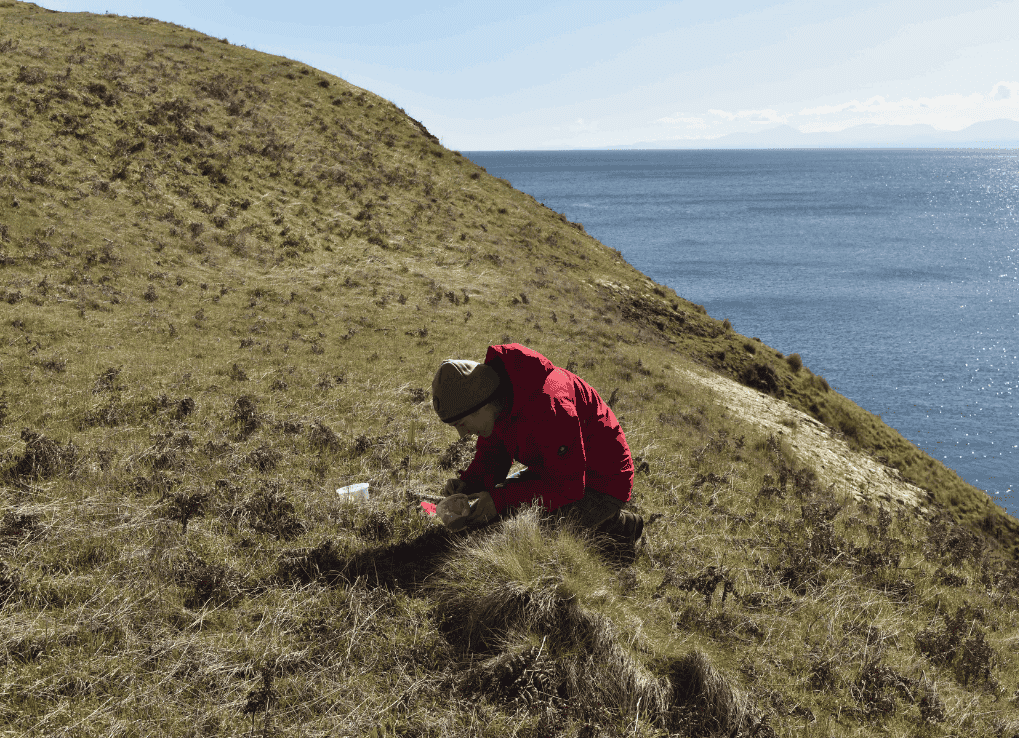
WOW! Look at those bluffs! Don’t fall off the edge little checkerspots! Here, field technician Bonnie Zand releases a group of larvae.
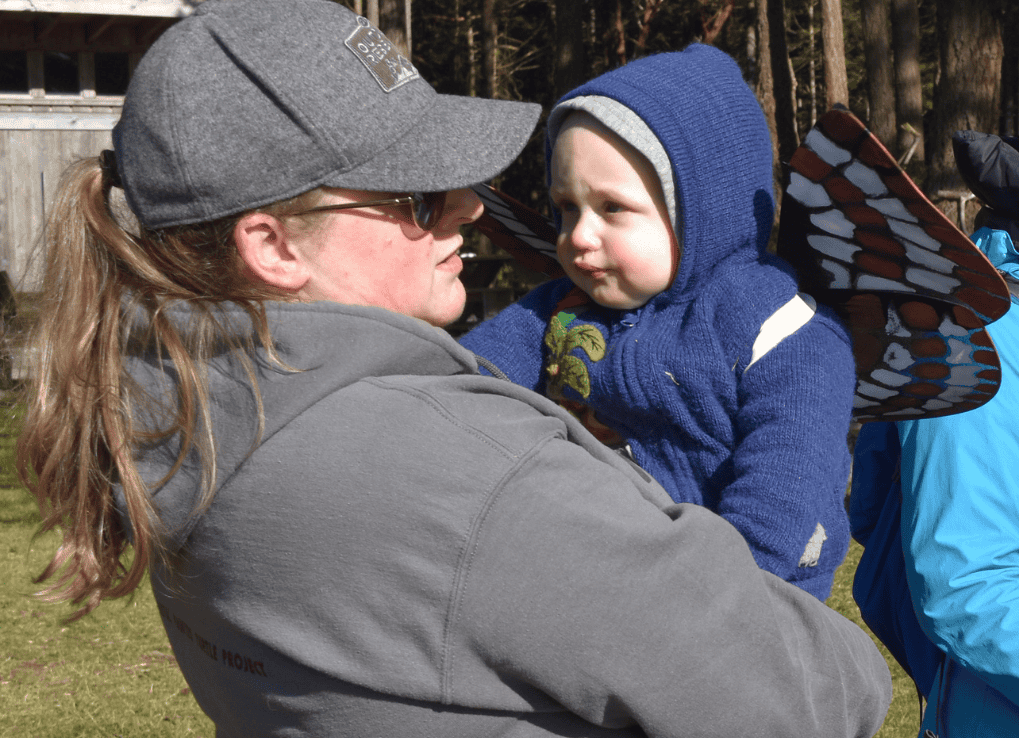
WPC Biologist Andrea’s son, dons his Taylor’s checkerspot wings as the program’s mascot.
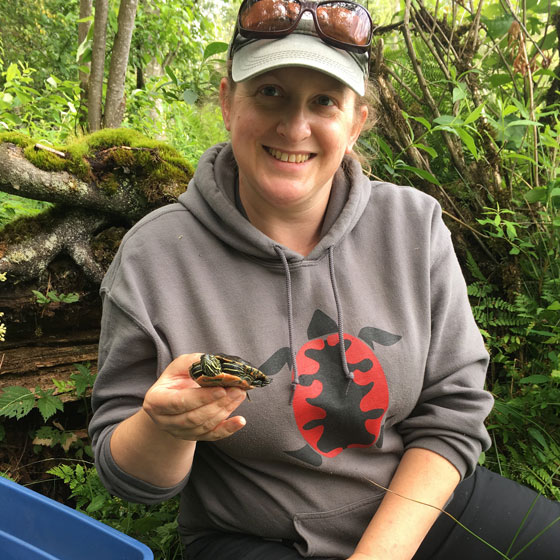
Andrea manages WPC’s captive breeding and release programs for the Oregon spotted frog and the coastal western painted turtle. Andrea has studied at-risk reptiles and amphibians in Canada and abroad, including a term at the Durrell Wildlife Conservation Trust in Jersey. Andrea also manages the Taylor’s checkerspot butterfly recovery program in B.C.
We need your help


