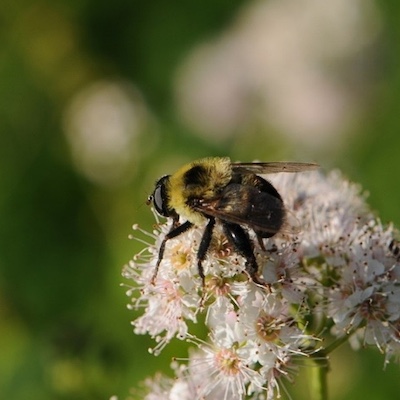
Rusty-Patched Bumble Bee

Bombus affinis
Species Status: Endangered in Canada; Critically Endangered globally (IUCN assessment)
Action Required: Conservation breeding and reintroduction

Rusty-Patched Bumble Bee (Bombus affinis)

One of the most common species of bumble bee in southern Ontario as recently as the 1980s, this hard-working pollinator is now on the brink of extinction throughout its large range. Despite thorough surveys of historic sites across Ontario, the rusty-patched bumble bee has not been observed in Canada since 2009.
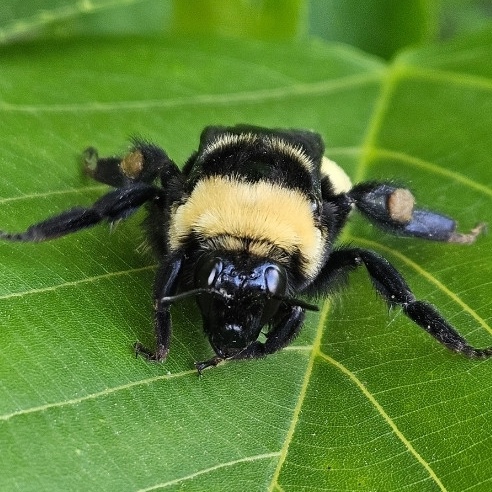
The rusty-patched bumble bee gets its name from the rust-coloured patch found on the abdomens of workers and males. They also have distinctively short tongues. This means they occasionally “nectar-rob” flowers by piercing a hole through the back to access the nectar that their short tongues can’t reach. Spring queens emerge in early April, and the workers, males and new queens can live until late October, making it the species with the longest colony cycle in eastern North America.
Habitat

The rusty-patched bumble bee is considered a habitat generalist, meaning that it can adapt to a wide range of environmental conditions. It forages from dozens of food plants, including milkweed, sunflowers, clovers and fruit blossoms. As recently as the early 1980s, it was seen quite commonly in the parks and ravines of the City of Toronto, as well as in urban gardens, wetlands and old fields and near forests. The last known location of rusty-patched bumble bees in Canada is in Ontario’s Pinery Provincial Park.

Range

The rusty-patched bumble bee has a very large historical range along the east coast of the U.S. from southern Maine through Tennessee, with an extension west along the northern states through Minnesota. In Canada, it was found in southern Ontario and extreme southwestern Quebec. A study in southern Ontario in the early 1970s shows the rusty-patched bumble bee was then the fourth most common bumble bee species (out of 14).

Threats

Scientists have not pinpointed the reasons for the rapid decline of such a widespread and common pollinator. At the local level, pesticide use, habitat loss and increased competition with other species like the European honeybee contribute to declines. Range-wide factors may include climate change and infections carried by commercial bees.

Recovery

Recommended Recovery Actions

The Ontario Recovery Strategy for rusty-patched bumble bee calls for a number of conservation measures, including restoring habitat, continuing to search for wild rusty-patched bumble bees at their historic sites and, if any queens can be located, establishing a conservation breeding program.

What we are doing

What is the Bumble Bee Recovery project?

Since the 1990s, bumble bee numbers have been plummeting, and that spells ecological disaster. Ninety per cent of all flowering plants — including most of the fruits and vegetables in your fridge — need these pollinators in order to reproduce.

Until the causes of these declines can be reversed, conservation breeding and reintroduction is the only way to safeguard at-risk bumble bees. Today, WPC is the only organization in Canada rebuilding wild bee populations through captive breeding. Thanks to recent breakthroughs, we’ve figured out how to dramatically increase the number of queens we produce. Once they’re released into the wild, they can establish their own colonies, producing hundreds of pollinators to sustain the ecosystems around them.

Purpose

We work to prevent native bee species from disappearing by building self-sustaining populations in Canada, studying the various bee species to learn more about the threats they face, and create opportunities for community involvement.

Goals

In 2023 we plan to have:

  • 60 bumble bee colonies established in the conservation lab
  • Produced 300 captive bred queens for overwintering
  • 17 sites across southern and central Ontario monitored for bumble bee population declines

Find out how Wildlife Preservation Canada is helping save native pollinators, including bumble bees, and how you can make a difference.

We need your help

Donate to save endangered species
like the Rusty-Patched Bumble Bee

by Catherine Woo-Durand
Fieldwork forays
by Emily Forrester
Flies in disguise